
Article: High End Dog House Maintenance: The Complete Care Guide
High End Dog House Maintenance: The Complete Care Guide
Last Updated: October 25, 2026
Quick Summary
High end dog house maintenance follows a three-clock schedule: clean the interior weekly, inspect hardware and seals seasonally, and refresh finishes annually. Monthly walk-arounds catch roof leaks, wall gaps, and loose hardware before they rot wood or cause a costly rebuild.
- Walk the full exterior with a flashlight every month, checking roof, walls, door gaps, and hardware.
- Spring is inspection season: seal every opening before summer storms arrive.
- Sand and repaint exterior surfaces yearly, replacing rusted hardware with exterior-grade stainless steel.
- Clean or replace climate-control filters at the start of each heating and cooling season.
- Photograph the house at each seasonal inspection to spot slow changes like paint failure or sagging.
Table of Contents
- Why High End Dog House Maintenance Costs Less Than Repairs
- Your Seasonal Dog House Maintenance Checklist
- Luxury Dog House Cleaning Without Damaging the Finish
- Wooden Dog House Maintenance: Rot, Paint, and Hardware
- Dog House Repair: Fixing Roof Leaks, Gaps, and Worn Wood
- Caring for Climate Control, Lighting, and Smart Features
- Book a Maintenance Consultation for Your Custom Built Dog House
- Frequently Asked Questions
Why High End Dog House Maintenance Costs Less Than Repairs
A luxury dog house is a real structure, and it fails like one.
How much cheaper? We can't quote a repair bill for your specific model, but the logic is simple. A loose shingle costs minutes to reseat.
There's a second reason to stay ahead of it. Research on kenneled dogs found that newly admitted shelter dogs had higher plasma cortisol levels than dogs living in homes, which points to how much environment shapes a dog's stress (Assessing the welfare of kennelled dogs(https://pmc.ncbi.nlm.nih.gov/articles/PMC7126575/)).
Below, we'll show you exactly how to build a yearly routine, care for each material, and decide when to repair versus replace.
Your Seasonal Dog House Maintenance Checklist
A good dog house maintenance checklist runs on three clocks: weekly, seasonal, and annual. A designer dog-house guide recommends cleaning the interior weekly, inspecting hardware seasonally, and refreshing finishes annually (Best Designer Dog Houses for 2026(https://dogominium.com/blogs/news/best-designer-dog-houses-2026)).
Here's the full schedule we recommend:
| Frequency | Task | Why It Matters |
|---|---|---|
| Weekly | Clean interior, wash bedding | Stops odor, pests, and damp |
| Monthly | Check roof, walls, and door gaps | Catches leaks early |
| Seasonal | Inspect hardware, seals, and stairs | Prevents rust and rot |
| Annually | Repaint and refresh finishes | Protects exterior wood |
| Annually | Service climate control and wiring | Keeps systems safe |
Most owners treat that table as the whole plan. It isn't. The table sets frequency; the calendar sets timing. A high-end house has more systems than a plastic igloo, so the work splits across the year instead of landing in one weekend.
Monthly Walk-Around (15 Minutes)
Do this on the same day each month so it becomes habit. Walk the full exterior with a flashlight, even in daylight.
- Roof: Look for lifted shingles, popped nails, granule loss on asphalt shingles, and debris dams behind vents. A granule pile at the drip edge means the shingle is near the end of its life.
- Walls and trim: Run a hand along seams and corners. Feel for soft spots, bubbling paint, or gaps wider than a credit card.
- Door and threshold: Check the gap at the bottom of the door and the seal around the frame. A door that sticks in humid weather is a moisture signal, not just a fit issue.
Spring: Inspect the Roof and Seal the Envelope
Spring is inspection season. Walk the roof line and look for lifted shingles, popped nails, and holes where water can enter. Check wall seams and the door frame for gaps.
Spring is also the right time to wash the exterior after winter grit, touch up any paint that failed over the cold months, and confirm that vents and fans are clear of debris.
Summer: Watch Heat, Ventilation, and Pests
Summer maintenance is about airflow and insects. Clear cobwebs and debris from vents and fans. Check that shade and ventilation paths are unobstructed. Inspect the interior for signs of wasps, ants, or rodents, and treat any nest before it grows. If the house has cooling, test it on a hot afternoon and confirm the interior stays comfortable.
Fall: Prepare for Freezing Nights and Storms
Fall is about water and cold. Clear debris from the roof and vents. Recheck seals around windows and doors. Confirm the heating side of your climate control is ready before the first freeze, not after it.
Fall is also the month to drain or protect any water lines, remove and store washable cushions if the house will sit unused, and trim back vegetation that traps moisture against the walls.
Annual: Refresh Finishes and Service Systems
Once a year, sand and repaint or re-stain exterior surfaces, replace rusted hardware with exterior-grade stainless steel, and have climate-control and electrical components inspected. Schedule this in early fall so the fresh finish cures before freezing weather.
A Simple Log
Keep a one-page log taped inside a cabinet or saved on your phone. Record the date, what you checked, and anything you fixed or deferred. When you eventually sell the house or call for service, that log is the maintenance history, and it is the difference between a well-kept structure and one that has been quietly deteriorating.
Luxury Dog House Cleaning Without Damaging the Finish
Luxury dog house cleaning is gentle work. Skip the pressure washer and the harsh chemicals. Use a soft cloth, mild soap, and warm water, then dry every surface you wipe.
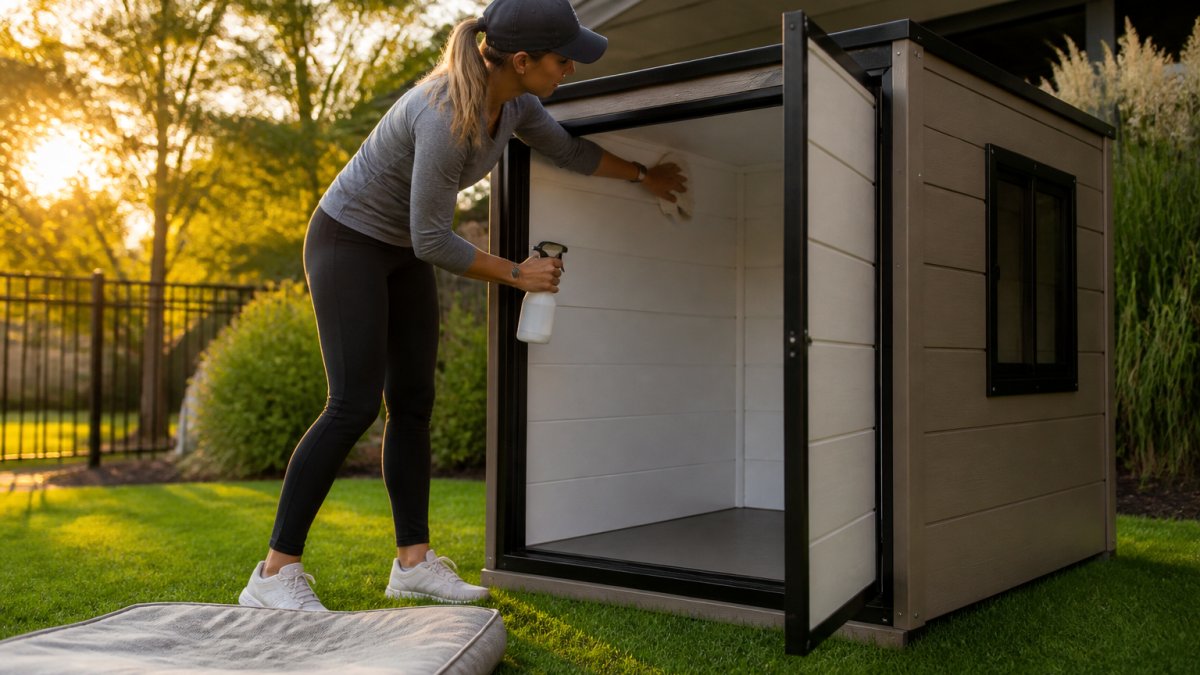
Interior care matters most. Remove and wash the cushion. Wipe vinyl interior walls down weekly.
Watch out: never spray water directly at electrical outlets, light fixtures, or HVAC vents. Wipe around them with a barely damp cloth instead.
Executive Luxury Insulated Customized Dog Kennel - 4' × 8' →
Wooden Dog House Maintenance: Rot, Paint, and Hardware
Wooden dog house maintenance comes down to three enemies: moisture, sun, and loose metal. Probe exposed wood with a screwdriver. Soft, spongy spots mean rot has started, and paint won't fix it.
Repaint exterior surfaces on a yearly cycle. Sand bare spots, prime them, then apply a weather-rated exterior paint or stain. While the paint dries, check every hinge, latch, and screw.
Material choice drives how much work you face. Insulation, weather resistance, and durability are the qualities that decide how well a house holds up (Durable Luxury Dog House Materials Guide(https://dogominium.com/blogs/news/durable-luxury-dog-house-materials-guide)).
Dog House Repair: Fixing Roof Leaks, Gaps, and Worn Wood
Dog house repair follows a simple order: roof first, then walls, then wood, then finish. Water always comes from above, so stop the leak before you fix what it damaged.
- Roof leaks: reseat lifted shingles, replace cracked ones, and seal around nails and seams.
- Gaps: fill small gaps with exterior-grade sealant; replace cracked trim.
- Worn wood: cut out soft sections and patch with matching exterior lumber.
Repair or Replace? A Cost Comparison
Small fixes are almost always worth doing. Structural rot across a wall or roof deck is where replacement starts to win.
| Situation | Typical Action | Better Choice |
|---|---|---|
| One lifted shingle | Reseal or replace shingle | Repair |
| Small door gap | Apply exterior sealant | Repair |
| Surface paint wear | Sand and repaint | Repair |
| Soft wood in one board | Cut out and patch | Repair |
| Rot across a full wall | Rebuild the section | Replace |
| Sagging roof structure | Structural rebuild | Replace |
Caring for Climate Control, Lighting, and Smart Features
Climate control and wiring need a yearly service, and this is the step most owners skip. Change or clean filters. Clear vents and fans of debris. Test heating and cooling in both seasons, not just the one you're in.
That is the short version. A high-end house with heating, cooling, ventilation, lighting, and smart sensors has more failure points than a plain shelter, and each one has a specific maintenance move.
Heating and Cooling
- Filters: Clean or replace filters at the start of each heating and cooling season, and monthly during heavy use. A clogged filter makes the system run longer, which costs more and wears parts faster (HVAC Proper Installation of Filters).
- Coils and fins: Dust and pet hair collect on coils. Gently vacuum or brush them clean. Bent fins reduce airflow; a fin comb straightens minor bends.
- Condensate: If the cooling side produces condensate, check the drain line and pan for clogs or standing water. Standing water invites mold and insects and can damage the floor deck.
Ventilation and Airflow
Clear vents, fans, and intake openings of debris, cobwebs, and nesting material. Confirm that fans spin freely and that exhaust paths are not blocked by bedding or stored items. Good ventilation is what keeps interior moisture down, and moisture is the root of most rot and mold problems.
Electrical Safety
Electrical safety deserves its own check. Look for chewed or frayed cords, and confirm outlets and fixtures stay dry and covered. If anything looks damaged, have a qualified electrician inspect it before your dog uses the house again.
- Cords: Route cords out of reach and protect them with conduit or cord covers. Dogs chew, and a chewed cord is both a shock and a fire risk.
- Outlets and fixtures: Confirm exterior-rated covers are intact and that no outlet sits where water can pool.
- Grounding and GFCI: Exterior circuits should be protected by ground-fault protection. If you are unsure, ask an electrician to confirm.
Smart Features and Sensors
Smart thermostats, cameras, door sensors, and automated vents add convenience but also add things that can fail silently.
- Batteries: Replace batteries in sensors and remotes on a set schedule, not when they die.
- Connectivity: Confirm the device still connects to your network and that alerts actually reach your phone. Test the alert, don't assume it.
- Firmware: Apply manufacturer updates when prompted; they often fix reliability and security issues.
A climate-controlled kennel only delivers its benefits when the system runs correctly.
Book a Maintenance Consultation for Your Custom Built Dog House
Every high end dog house maintenance plan works better with a second set of eyes. If you own one of our Executive Estate kennels, we can review your setup, your climate-control systems, and your seasonal schedule with you.
Our climate-controlled models, including the insulated Executive Estate line, are built for year-round comfort, and they deserve care that matches. Browse the custom luxury doghouses collection to confirm your model, then book a maintenance consultation with our team.
Frequently Asked Questions
How often should you clean a luxury dog house?
Wipe the interior weekly and wash bedding on the same schedule. Do a deeper clean monthly: remove the cushion, vacuum corners, and wipe down polyurea flooring and wallboard with a pet-safe cleaner. Seasonal tasks like roof inspection, hardware checks, and finish touch-ups belong on a separate calendar. A written dog house maintenance checklist keeps the weekly and seasonal jobs from blurring together, especially in homes with more than one dog.
How do you maintain a wooden dog house in rain and snow?
Wooden dog house maintenance comes down to keeping water out and letting the wood dry. Check the roof for missing shingles and reseal gaps along the walls before the rainy season. Repaint or restain the exterior every one to three years, and replace any board that has gone soft or discolored. Raise the structure slightly off the ground so moisture does not wick up from below. Shelter dogs show higher stress hormones than dogs in homes, so a dry, draft-free interior is not cosmetic; it directly supports your dog's comfort.
What is the best way to clean a dog house without damaging its finish?
Use a mild pet-safe soap and warm water, and skip bleach or abrasive pads on painted wood, vinyl wallboard, and polyurea flooring. Remove cushions and bedding first, vacuum loose hair, then wipe surfaces with a damp cloth and let everything air dry fully before the dog returns. For luxury dog house cleaning, a removable top or hinged panel makes the interior far easier to reach. Rinse outdoor surfaces with a garden hose, never a pressure washer, which can force water behind seams and lift finishes.
How can you tell when a dog house needs repairs?
Look for water stains on interior walls, soft spots in the floor, daylight showing through roof gaps, and rust or loose screws on hinges and hardware. A musty smell after rain usually means moisture is trapped somewhere. Small fixes cost little: shingles, sealant, and replacement boards are inexpensive hardware-store items. Structural rot is different. For a premium kennel like the Executive Estate 6' x 8' at $9,124.99, catching a roof leak early protects an investment that would cost far more to replace than to repair.
Your dog's house protects them from every season, so it deserves the same care you give the rest of your home. Dogominium builds architecturally inspired, climate-controlled dwellings, offers after-hours and weekend consultations, and donates one percent of profits to rescue shelters. Get started with Dogominium and keep your dog's home dry, safe, and comfortable for years.


