

How to Clean Luxury Dog Houses: A Step-by-Step Guide
Table of Contents
- How to Clean Luxury Dog Houses: What You'll Need First
- Step-by-Step: How to Clean a Luxury Dog House
- How to Disinfect a Dog Kennel Without Damaging Finishes
- Pet-Safe Cleaners for Dog Houses: What Works on Each Material
- How Often to Wash Dog Bedding and Deep Clean the Kennel
- How to Remove Dog Odors from Furniture and Kennel Interiors
- Drying, Ventilation, and Preventing Mold in Climate-Controlled Kennels
- Conclusion: A Cleaning Routine That Protects Your Investment
- Frequently Asked Questions
Last Updated: October 5, 2026
How to Clean Luxury Dog Houses: What You'll Need First
Cleaning clean luxury dog houses takes about an hour and a few basic supplies. Luxury dog houses use real materials: hardwood, powder-coated steel, polyurea flooring, and Trusscore wallboard. These surfaces need gentle care.
Gather your supplies before you start. This prevents mid-job trips to the garage.
Supplies for Every Surface Type
- Mild dish soap
- White vinegar
- Baking soda
- Two buckets of warm water
- Soft-bristled brush
- Stiff-bristled brush
- Garden hose
- Microfiber towels
- Paper towels
- Pet-safe disinfectant
Safety Steps Before You Start
- Remove your dog from the area
- Unplug any heating or cooling units
- Check for loose hardware or sharp edges
- Test any cleaner on a hidden spot first
Step-by-Step: How to Clean a Luxury Dog House
Here is the full process, start to finish. Follow these steps in order for the best results.
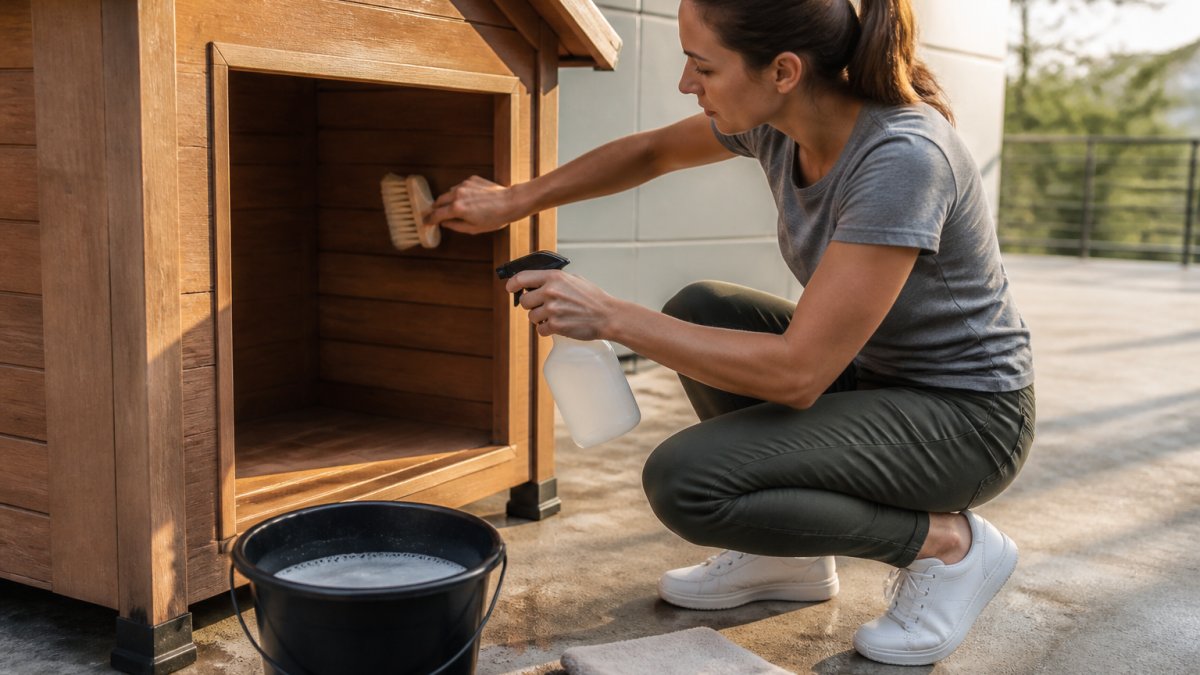
Step 1: Remove Your Dog and All Supplies
Move your dog to another area. Take out bedding, toys, food bowls, and water dishes. This gives you clear access to every surface.
Step 2: Clear Bedding, Toys, Food, and Waste
Pick up all loose items. Bag up old food and any waste. Set bedding aside for its own wash cycle.
Step 3: Sweep and Rinse Loose Debris
Sweep the floor and walls with a stiff-bristled brush. Use a hose to rinse away dirt and debris.
Step 4: Wash Interior and Exterior Surfaces
Mix a few drops of mild dish soap into warm water. Scrub the interior walls, floor, and dog door. Use a soft-bristled brush on finished wood and painted surfaces. Then wash the exterior. Rinse your brush often.
Step 5: Rinse Thoroughly and Dry Completely
Rinse every surface with clean water. Soap residue attracts dirt and can irritate your dog's skin. Dry with towels, then let the kennel air out. Good airflow stops mold before it starts.
How to Disinfect a Dog Kennel Without Damaging Finishes
Disinfecting a dog kennel means killing germs without harming the finish. The trick is choosing the right product for each material.

White vinegar can be used for light disinfection. Mix one part vinegar with one part water. Spray it on, wait a few minutes, then wipe dry.
For tougher jobs, use a pet-safe disinfectant. Read the label and follow the contact time. That is how long the product must stay wet to work.
Avoid bleach on wood, polyurea, and painted steel. It can strip finishes and dull surfaces.
Pet-Safe Cleaners for Dog Houses: What Works on Each Material
Pet-safe cleaners for dog houses fall into a few simple groups. Pick based on the surface, not the brand.
- Mild dish soap (a few drops per quart of warm water): Everyday grime on nearly all hard surfaces
- White vinegar, diluted 1:1 with water: Glass, stainless steel, sealed tile, and light disinfection
- Baking soda paste (3 parts soda to 1 part water): Lifts odors and gently scrubs stains
- Oxygen-based (percarbonate) cleaner: Organic staining on fabric and grout where vinegar is too weak
- Enzyme cleaner: Urine, saliva, and other protein-based contamination
- Pet-safe disinfectant: Deep cleaning and post-illness sanitation
Luxury dog houses mix materials, and each one reacts differently to water, pH, and abrasion. Work surface by surface.
Sealed and Painted Wood
Wipe with a damp cloth and mild soap. Ring the cloth out so it is damp, not wet. Dry immediately with a microfiber towel. Standing water is what warps grain, lifts paint at the edges, and opens seams. Avoid vinegar on painted wood, the acid dulls the finish over repeated use. Never use a pressure washer; it drives water past the seal and into end grain.
Composite Panels and Trusscore Wallboard
Composite and PVC wallboard are the easiest surfaces in the house. Soap and water on a soft cloth handles almost everything. Trusscore wallboard wipes clean with soap and water and needs no special products, one reason we build our Executive Luxury Insulated Customized Dog Kennel with these materials. Skip abrasive pads and scouring powders; they leave a haze that traps dirt.

Polyurea and Sealed Concrete Floors
Polyurea flooring handles scrubbing well. Its seamless surface resists moisture and bacteria, so a stiff-bristled brush works fine here.
Powder-Coated and Stainless Steel Hardware
Powder-coated steel: mild soap, soft cloth, dry immediately. Avoid bleach, ammonia, and abrasive pads, they strip the coating and invite rust at hinges and latches. Stainless steel: diluted vinegar or a stainless-specific cleaner, wiped with the grain. Never use steel wool; it leaves carbon particles that rust.
Stone, Tile, and Grout
Sealed stone and tile tolerate diluted vinegar, but grout is porous and holds odor. Scrub grout with a baking soda paste and a soft brush, then rinse and dry. Unsealed stone should get pH-neutral soap only, vinegar etches it over time.
Premium Fabrics and Upholstery
Removable cushion covers: check the care tag, then machine wash cold on gentle and air dry. Fixed upholstery: vacuum first, then spot clean with a mild soap solution and blot, never rub, which pushes soil deeper. Enzyme cleaner for urine, oxygen-based cleaner for organic stains.
Specialty Coatings and Climate-Control Components
Some luxury houses use antimicrobial or UV-resistant coatings. Test any cleaner on a hidden spot first, and stick to pH-neutral soap unless the manufacturer specifies otherwise. For climate-control units, unplug before cleaning, wipe vents and filters with a dry cloth, and never spray liquid into the housing.
Executive Luxury Insulated Customized Dog Kennel - 4' × 8' →
How Often to Wash Dog Bedding and Deep Clean the Kennel
Wash dog bedding every one to two weeks. Deep clean the kennel itself every four to six weeks.
Here is a simple schedule to follow:
| Task | Frequency | Time Needed |
|---|---|---|
| Spot clean surfaces | Weekly | 10 minutes |
| Wash bedding | Every 1-2 weeks | 30 minutes |
| Full deep clean | Every 4-6 weeks | 1 hour |
| Check hardware and seals | Monthly | 15 minutes |
| Inspect for mold or moisture | Monthly | 10 minutes |
More frequent cleaning helps in humid climates or during shedding season. Dogs with allergies or skin issues need bedding washed weekly.
How to Remove Dog Odors from Furniture and Kennel Interiors
Removing dog odors starts with finding the source. Odor lives in urine, saliva, and oils trapped in surfaces.
Step 1: Find the Source, Not Just the Smell
Run your hand over the surface. Odor that returns after a vinegar wipe may mean contamination has penetrated below the surface.
Step 2: Treat Urine and Protein Stains with an Enzyme Cleaner
Enzyme cleaners use bacteria or enzymes to break down the uric acid crystals in urine, the part that keeps releasing odor for months. Vinegar and baking soda neutralize surface smell; they do not dissolve uric acid.
- Blot up as much liquid as possible with paper towels. Do not rub.
- Apply the enzyme cleaner so the area stays visibly wet.
- Let it sit for the contact time on the label, often 10 to 15 minutes, sometimes longer for old stains.
- Blot dry, then let the area air dry completely. The enzymes keep working while damp.
For soaked seams or cushion cores, apply in layers and let each one dry before adding the next. A single pass rarely reaches the bottom of the contamination.
Step 3: Lift Surface Odor with Baking Soda
For lighter stains and general odor, sprinkle baking soda over the spot. Let it sit for 15 minutes. Vacuum or brush it away. The baking soda pulls odor out of the material.
Step 4: Rinse with Diluted Vinegar
Mix equal parts white vinegar and water. Spray the area and let it dry. The vinegar smell fades as it dries, taking the dog odor with it. Vinegar is a good finisher, not a substitute for enzyme treatment on urine.
Step 5: Match the Method to the Material
- Wood and furniture-style crates (like our Artisanal Luxury Wooden Dog Kennel and End Table): wipe with a damp cloth and mild soap, dry right away, never soak the wood. Enzyme cleaner on a cloth, not poured on.
- Polyurea and sealed concrete floors: enzyme cleaner works well; scrub into seams with a soft brush.
- Trusscore and composite wallboard: wipe with soap and water; enzyme cleaner for urine splash at the base.
- Upholstery and cushions: vacuum, then enzyme cleaner blotted in, then air dry. Remove covers and wash if the tag allows.
- Stone and grout: baking soda paste into grout lines, rinse, dry; enzyme cleaner for urine that has soaked in.
Step 6: Handle Persistent Contamination
If odor returns, the contamination may be under a removable panel, in a floor seam, or in the bedding itself. Pull the bedding and wash it hot if the tag allows. Check the floor seam and the base of the walls.
Drying, Ventilation, and Preventing Mold in Climate-Controlled Kennels
Mold needs moisture and still air. Climate-controlled kennels with powered ventilation dry faster and stay drier. That is a real advantage in humid regions.
After any deep clean, follow these steps:
- Towel-dry all surfaces
- Leave the dog door open for airflow
- Run fans or vents for 30 minutes
- Check corners and seams for trapped water
- Wait until fully dry before adding bedding
For climate-controlled units, run the system on fan mode after cleaning. This pushes moist air out. If you spot dark spots or a musty smell, clean again with vinegar and dry thoroughly.
Our Executive Estate 6' x 8' kennel uses gable vents and powered ventilation. These features help prevent the damp conditions mold needs.

Conclusion: A Cleaning Routine That Protects Your Investment
A luxury dog house is a real investment. Dirt, moisture, and odor wear down even the best materials over time. A simple routine keeps yours looking new for years.
Dogominium builds dog houses with polyurea flooring and Trusscore wallboard. These materials are made for easy cleaning and long life. Our climate-controlled kennels add ventilation that helps prevent mold. And one percent of our profits go to rescue shelters with every purchase.
Get started with Dogominium and give your dog a clean, comfortable space that lasts.
Frequently Asked Questions
What is the best disinfectant for a luxury dog house?
For polyurea flooring and Trusscore wallboard, a diluted white vinegar solution (1 cup vinegar to 1 gallon water) or a pet-safe disinfectant labeled for animal housing works well. Avoid bleach on wood finishes and stainless-steel hardware. Apply, let sit 5-10 minutes, then rinse thoroughly and dry. Always test on a small area first.
How often should you clean a luxury dog house?
Spot-clean daily by removing waste and shaking out bedding. Wash bedding weekly. Do a full deep clean of interior and exterior surfaces monthly, or every two weeks during muddy or wet seasons.
How do you clean a dog house without damaging wood or upholstery?
Use a soft-bristled brush or microfiber cloth with lukewarm water and mild dish soap. Wipe with the grain on wood, never soak the surface. Avoid bleach, abrasive scrubbers, and harsh chemicals that strip finishes or fade fabric.
How do you remove odors from a dog house after an accident?
Remove solids, then blot urine with paper towels. For wood or concrete, sprinkle baking soda, let it absorb for 15 minutes, then vacuum or sweep. Rinse with a 1:1 white vinegar and water solution, then dry thoroughly with towels and ventilation to prevent mold.


