

Luxury Pet House Interior Design Consultation Guide
Table of Contents
- Why a Luxury Pet House Interior Design Consultation Changes Everything
- What Pet-Friendly Interior Design Services Actually Deliver
- Custom Luxury Dog House Interior Design: Materials and Craftsmanship
- Luxury Pet Furniture Integration: Blending Function With Aesthetic
- Smart Home Pet Technology and Accessibility for Aging Pets
- How to Prepare for Your Consultation: A Step-by-Step Checklist
- Frequently Asked Questions
Last Updated: October 4, 2026
Why a Luxury Pet House Interior Design Consultation Changes Everything
A luxury pet house interior design consultation is a personalized planning session in which a specialist maps your dog's size, breed, climate needs, and habits against your home's architecture, then recommends a built-in or freestanding dwelling that belongs in the room rather than beside it. At Dogominium, we offer a free consultation to help you choose the right luxury pet dwelling.

That mismatch carries real costs: a crate that crowds a hallway gets shoved into a garage, a kennel sized for a puppy stops working at eighteen months, and an outdoor house in the wrong material looks tired after two hard winters.
The Psychology Behind Pet-Centric Design
Dogs are den animals: an enclosed, predictable, low-traffic space where a dog can watch the room without being watched. When a dwelling delivers that, most owners notice calmer behavior within weeks.
What most guides miss is that the den has to face the right direction. A crate with its back to the main circulation path gets used constantly; the same crate facing a wall gets ignored.
What Pet-Friendly Interior Design Services Actually Deliver
Pet-friendly interior design services deliver three things: material specifications that survive claws and accidents, spatial planning that gives the dog a defined zone, and a finish palette that matches your interiors. A good provider documents all three so your contractor can execute without guessing.
Here is what a professional engagement typically covers:
- Material specification for upholstery, flooring, and finishes, with wear ratings and cleaning instructions
- Space planning that locates the pet zone relative to traffic, sightlines, and temperature
- Custom millwork drawings for built-in crates, feeding stations, and storage
Virtual Consultations vs. In-Home Visits
Virtual consultations work well when you know your room's dimensions and can photograph the space in daylight; they move faster and cost less time. In-home visits win when the room has awkward geometry, existing built-ins, or competing light sources, since a specialist standing in the space catches things a photo hides. Dogominium offers after-hours and weekend consultations.
Custom Luxury Dog House Interior Design: Materials and Craftsmanship
The right material for a custom luxury dog house interior design depends on where the structure lives and what it must survive. The useful question is which luxury materials earn their premium in a pet context, and which are marketing.
Material Selection by Environment
| Environment | Primary Material | Why It Holds Up | Watch For |
|---|---|---|---|
| Indoor living space | Solid hardwood top, reinforced steel frame | Withstands daily entry and exit, wipes clean | Unsealed end grain near water bowls |
| Covered patio | Reclaimed oak, hand-forged iron | Handles humidity without warping | Hardware that is not corrosion-rated |
| Exposed yard | Weather-resistant siding, sealed trim | Manages sun and rain year-round | Untreated fasteners that stain |
The ROI of Luxury Materials in a Pet Context
The premium on a performance fabric or sealed hardwood is usually justified by lifespan and cleanability, not looks.
- Performance velvet vs. standard upholstery. Performance velvet is woven with tight, short fibers and typically carries a high double-rub count, the abrasion rating describing how many rubs a fabric survives before showing wear. Standard decorative velvet pills and snags under claws within months. The premium is real only if the fabric is genuinely performance-rated, ask for the rub count, not the marketing name.
- Solution-dyed vs. surface-dyed fibers. Solution-dyed fibers hold color through the fiber rather than on it, so bleach-based pet-stain cleaners do not strip the color. Surface-dyed fabrics look identical new and fail faster.
- Sealed hardwood vs. oiled hardwood. A factory-applied polyurethane or ceramic sealer resists moisture and urine far better than an oil finish, a poor choice where accidents happen.
Owners commonly over-invest in the visible finish and under-invest in the substrate and hardware. The hardware fails first.
Craftsmanship: Where Budget and Luxury Actually Separate
Mass-produced pet furniture uses stapled joints and powder-coated hardware. Heirloom work uses secure latching, hand-textured steel, and finishes sanded between coats. The differences that matter most:
- Joinery. Mortise-and-tenon and doweled joints outlast staples. Ask how the frame is joined, not just what wood it is.
- Latch mechanism. A latch a dog can nose open is a design flaw. Look for a positive lock with a secondary catch.
- Ventilation. Bars, cutouts, and slatted panels determine airflow; a solid-sided unit with no ventilation becomes a heat trap.
A common mistake is buying on exterior photos alone. Ask what the interior floor, latch, and ventilation actually are, plus the rub count or wear rating on any fabric.
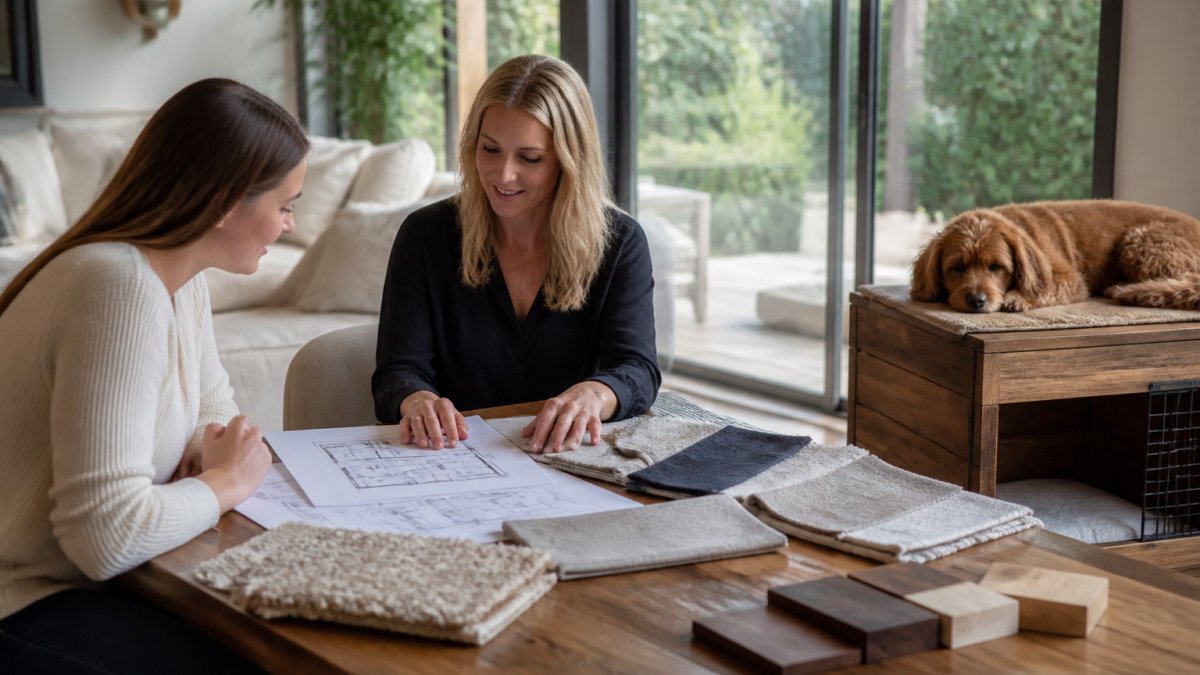
Luxury Pet Furniture Integration: Blending Function With Aesthetic
Luxury pet furniture integration means the dog's space performs a second job: a crate that is also an end table, a kennel that is also a sideboard, a feeding station built into cabinetry at the correct height.

Consider the difference in practice:
- A freestanding wire crate occupies floor space and does one job
- A furniture-style crate with a solid top occupies similar floor space and does two
- A built-in unit with custom millwork does two jobs and removes the floor footprint entirely
Dogominium's Artisanal Luxury Wooden Dog Kennel & End Table is the clearest example of the middle option: a solid hardwood top over a reinforced steel frame, with decorative paw-print cutouts that let light through the bars.
Designer Doghouse Consultation With a Specialist →
For households with more floor space and larger breeds, the Grand Haven Furniture-Style Dog Crate uses a sliding barn-door system that opens without adding to the unit's footprint, which matters in hallways and tighter layouts.

Smart Home Pet Technology and Accessibility for Aging Pets
Most luxury pet design content stops at aesthetics and durability. Two areas almost no competitor covers, and where a consultation earns its fee, are smart home integration and accessibility planning for aging dogs.
Smart Home Pet Technology Worth Specifying
Smart pet tech has matured enough that it should be planned into the room, not added later. The categories that matter most:
- Automated feeders and water fountains. These need a dedicated outlet, a level surface, and clearance for a bowl a large-breed dog cannot tip. Wire a built-in feeding station before the millwork goes in, retrofitting an outlet behind a finished cabinet is expensive.
- Pet cameras and activity monitors. Wired power beats battery swaps. If the den sits in a corner with no outlet, plan a low-voltage run during the design phase.
- Climate monitoring for outdoor dwellings. Remote temperature and humidity alerts tell you when a covered patio kennel is too hot or too cold before the dog is in it, the most useful tech add-on for an outdoor structure in regions with hard winters and hot summers.
Owners often buy these devices piecemeal, then discover the room has no clean way to power or conceal them. A consultation that maps outlets, low-voltage runs, and device placement against the floor plan prevents that.
Accessibility Design for Aging Pets
A dog that is eight today will be twelve in four years. Designing for that trajectory is cheaper than retrofitting for it. Four adjustments do most of the work:
- Lower the entry threshold. A step a young dog clears in one motion becomes a barrier as joints stiffen. A 4-inch entry is far easier than an 8-inch one, and the difference is invisible in the finished piece.
- Add a ramp, not a stair. Ramps work for dogs with hip or knee issues; stairs often do not. The ramp should be wide enough for the dog's body and finished with a non-slip surface.
- Keep the den on the main level. Dogs that lose access to their preferred space frequently stop using it entirely, defeating the purpose of the build.
- Specify non-slip flooring inside and around the den. Smooth hardwood and polished tile are hard on older joints. A low-pile rug or textured mat at the entry point makes a measurable difference.
What most reviews miss is that accessibility changes are cheapest at the design stage: retrofitting a ramp rarely matches the original joinery, and adding a lower entry means rebuilding the front of the unit.
How to Prepare for Your Consultation: A Step-by-Step Checklist
Preparation turns a consultation from a sales call into a design session. Gather the following beforehand and most decisions can be made in one sitting.
What you'll need:
- Your dog's current weight, height at the shoulder, and standing length
- Breed and age, plus any mobility changes you have noticed
- Two or three photos of the intended room in daylight, taken from the doorway
How the process runs:
- Book a slot, including after-hours or weekend if needed.
- Share your photos and measurements ahead of the call.
- Walk through sizing, placement, and material options with a specialist.
- Receive a recommendation with the specific configuration and finish.
- Confirm the order and any custom details before production begins.
Dogominium's Designer Doghouse Consultation With a Specialist is free: check out, leave your contact details, and a specialist reaches out to schedule. It exists so sizing, climate, and style questions get answered before you commit to a piece.
Frequently Asked Questions
How much does a luxury pet house interior design consultation cost?
Many premium pet furniture brands offer complimentary consultations to guide your purchase. Dogominium provides a free Designer Doghouse Consultation with a specialist who helps you choose based on breed, size, climate needs, and your home's architectural style. You simply check out on the consultation page and leave your contact information, then the team reaches out to schedule. This removes the guesswork from a significant investment and ensures the piece you order fits both your dog and your space.
What features define a luxury pet house interior?
A luxury pet house interior balances comfort, durability, and aesthetics. Look for climate-controlled kennel options for extreme weather, premium hardwoods and reinforced steel frames that resist wear, and finishes that match your home's palette. Custom millwork, built-in pet beds, and ergonomic layouts that give your dog a den-like retreat matter too. The goal is a space that feels intentional in your home rather than an afterthought, so your pet's area enhances the room instead of detracting from it.
How do I integrate custom pet furniture into my existing home decor?
Start by identifying the architectural style of the room, whether that is mid-century modern, rustic, or transitional, then choose pet furniture that echoes those lines and materials. A furniture-style crate with a solid hardwood top can function as an end table or nightstand, so it earns its footprint. Matching wood tones, metal finishes, and trim colors keeps the piece cohesive. A consultation with a specialist can help you match proportions and finishes before you commit to a custom order.
What should I prepare before a luxury pet design consultation?
Gather your dog's measurements, weight, and breed details, along with photos of the room where the piece will live. Note your climate conditions if the pet house is going outdoors, since extreme heat or cold affects material and insulation choices. Measure the available floor space and doorways, and collect inspiration images or paint swatches that reflect your aesthetic. Having these details ready lets the specialist recommend the right size, finish, and configuration in a single session.


