
Article: Climate Controlled Dog House Benefits: A 2026 Guide

Climate Controlled Dog House Benefits: A 2026 Guide
Table of Contents
- Why Climate Controlled Dog House Benefits Matter More Than Ever
- Temperature Regulation and Thermal Comfort for Dogs
- Best Insulated Dog Houses for Winter: Protection From Extreme Cold
- How to Keep a Dog House Cool in Summer
- Outdoor Dog House Heater Safety: Thermostatic Control and Safe Heating Elements
- Health Benefits: Joint Stress Reduction and Hypothermia Prevention
- Energy Efficiency, Smart Home Integration, and Long-Term Costs
- Conclusion: Investing in Year-Round Canine Wellness
- Frequently Asked Questions
Last Updated: September 30, 2026
Why Climate Controlled Dog House Benefits Matter More Than Ever
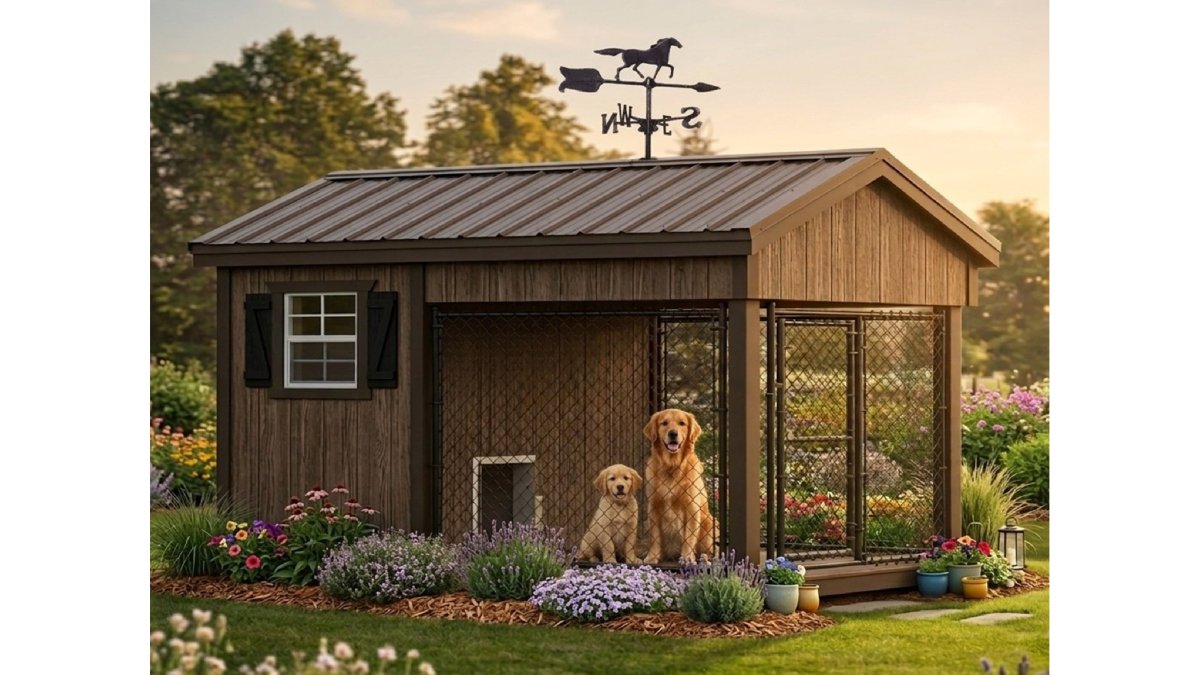
A climate controlled dog house is an outdoor shelter with powered heating, cooling, and ventilation that holds a stable interior temperature regardless of what the weather does outside. For Dogominium, that definition is the starting point of every build we sell, and it's the reason this category exists at all: a dog left outdoors in a heat wave or a cold snap is not "fine because dogs have fur."

Most dog owners assume a doghouse is a windbreak. That's the old model, and it's the one that gets dogs into trouble. The benefits of a climate controlled dog house go well beyond comfort: thermal regulation supports joint health in older animals, prevents the temperature swings that drive heat stress and cold-related illness, and gives a dog a genuine retreat rather than a box it tolerates. Below, we break down what these systems actually do, where they fail, and how to size one for your dog and your climate.
Temperature Regulation and Thermal Comfort for Dogs
Thermal comfort for a dog depends on ambient temperature, humidity, airflow, and the animal's own ability to shed or retain heat, and a climate-controlled structure manages all four. Dogs cool themselves mainly by panting and through their paw pads; they cannot sweat across their bodies the way humans do. That single fact explains why a shaded, ventilated shelter outperforms a sealed one in summer, and why a heated, insulated one outperforms a drafty one in winter.


Temperature stability matters more than any single high or low reading. A structure that swings from hot at midday to cold at night forces a dog's body to work constantly to compensate. A climate-controlled environment flattens that curve, which is what "climate adaptation" actually means in practice for an outdoor dog.
Breed-Specific Thermal Needs
Breed matters enormously here, and most generic advice ignores it. Brachycephalic breeds (bulldogs, pugs, boxers) have compressed airways and overheat far faster than a Labrador; for them, cooling and air circulation are not optional. Double-coated northern breeds (Huskies, Malamutes, Great Pyrenees) handle cold well but suffer in heat and should never sit in a sealed, sun-exposed box. Short-coated and lean breeds (Greyhounds, Whippets, Dobermans) have almost no insulation and chill quickly once the temperature drops. Senior dogs of any breed regulate temperature less efficiently than young ones.
If you're choosing a shelter, start with the dog's build, not the square footage. A heavy-coated breed in a mild climate needs ventilation and shade more than heat; a thin-coated senior in a cold climate needs insulation and a heat source with real thermostatic control.
Best Insulated Dog Houses for Winter: Protection From Extreme Cold
The best insulated dog houses for winter combine a high insulation R-value, a weather-resistant shell, and a raised floor that keeps the animal off cold ground. Insulation slows heat loss; the shell keeps wind and precipitation out; the raised floor breaks the conductive path between the dog and frozen earth. Miss any one of those and the other two underperform.
Insulation R-Value and Weather-Resistant Construction
Insulation R-value measures how well a material resists heat flow; higher numbers mean slower heat loss. In practice, an R-11 to R-13 insulated wall assembly is a meaningful step up from an uninsulated or thin-walled box, and it's the range Dogominium builds into its insulated kennels. Weatherproof construction adds a second layer of protection: sealed seams, a sloped or overhanging roof, and materials that don't absorb water or crack through freeze-thaw cycles.
What most buyers miss is the floor. A dog lying on cold concrete or bare ground loses heat through conduction no matter how good the walls are. A raised, insulated floor and a washable surface such as polyurea flooring solve that, and they're far easier to keep hygienic than raw wood.
| Winter Shelter Feature | What It Does | Why It Matters |
|---|---|---|
| Insulation R-11 to R-13 | Slows heat loss through walls | Keeps interior stable without constant heating |
| Weather-resistant shell | Blocks wind, rain, snow | Prevents drafts and moisture buildup |
| Raised insulated floor | Breaks ground conduction | Stops heat loss through the belly and paws |
| Thermostatic heater | Maintains a set temperature | Avoids overheating and cold swings |
| Gable vents | Manage humidity and stale air | Reduces condensation and odor |
How to Keep a Dog House Cool in Summer
Keeping a dog house cool in summer comes down to blocking solar gain, moving air, and giving the dog a way to dump heat. Shade is the cheapest intervention: position the structure out of direct afternoon sun or add a shade structure above it. Beyond that, the mechanics matter.
- Ventilation: Gable vents and powered fans move hot, humid air out and pull cooler air in. Passive vents alone stall on still days.
- Insulation works both ways: The same R-value that holds heat in during winter slows heat gain in summer.
- Cooling: Powered cooling, not just airflow, is what separates a genuinely climate-controlled structure from a shaded box.
- Water: Automatic water systems keep a dog hydrated without you refilling a bowl that's gone warm.
- Surface temperature: A light-colored roof and a shaded entry reduce radiant heat at the doorway, where dogs tend to lie.
Humidity control is the underrated piece. A humid shelter feels hotter than a dry one at the same air temperature, because panting becomes less effective. Ventilation that exchanges air rather than just stirring it is what actually lowers the heat index inside.
Executive Luxury Insulated Customized →
Outdoor Dog House Heater Safety: Thermostatic Control and Safe Heating Elements
Outdoor dog house heater safety rests on three things: thermostatic control that prevents overheating, heating elements rated for the environment, and an electrical layout built for outdoor use. An unregulated heat source in a small enclosed space is a genuine hazard, not a convenience.
Thermostatic heating technology maintains a set temperature by cycling the heat source on and off as conditions change, rather than running continuously.
Health Benefits: Joint Stress Reduction and Hypothermia Prevention
The health case for climate control is where the benefits stop being about luxury. Hypothermia prevention and joint stress reduction are the two outcomes owners notice most, and both trace directly to temperature stability.
Energy Efficiency, Smart Home Integration, and Long-Term Costs
Running costs depend on insulation quality, heating efficiency, and how hard the system has to work to hold temperature, which is why energy-efficient insulation and a tight thermal envelope pay for themselves over time. A well-insulated structure with thermostatic control cycles less than a poorly insulated one, and less cycling means lower energy consumption.
| Approach | Upfront Cost | Ongoing Costs | Lifespan |
|---|---|---|---|
| Uninsulated wooden box | Low | Frequent repair or replacement | Short |
| Insulated structure, no climate control | Moderate | Minimal energy use | Moderate |
| Climate-controlled kennel | Higher | Energy use, offset by efficiency | Long |
DIY vs. Professional Installation Safety
DIY installation is viable for a structure that arrives as a finished unit, but the safety-critical work is the electrical side. Bringing power to an outdoor structure means outdoor-rated wiring, proper grounding, and protection from moisture, and mistakes there create shock and fire risk that no amount of good carpentry offsets. If your build includes heating, cooling, or powered ventilation, have a licensed electrician handle the supply and connection.
Conclusion: Investing in Year-Round Canine Wellness
Every climate decision you make for an outdoor dog is really a decision about how much of the year that dog spends comfortable versus compensating. Insulation, ventilation, thermostatic control, and a raised floor aren't features to compare line by line; they're the components of a single system that has to work together.
Frequently Asked Questions
How cold is too cold for a dog outside in a dog house?
Most dogs should not be left in an unheated outdoor dog house when temperatures drop below 45°F. Small breeds, seniors, and short-haired dogs are at risk even at 50°F. A climate controlled dog house with insulation and thermostatic heating maintains a safe interior temperature regardless of outside conditions, preventing hypothermia and cold-related health risks.
Do insulated dog houses stay cool in summer?
Insulated dog houses alone can stay cooler than uninsulated ones, but they still trap heat without ventilation. To keep a dog house cool in summer, you need air circulation, shade, and ideally powered cooling. A climate-controlled model with fans, gable vents, and optional air conditioning provides consistent temperature stability even during heat waves.
Are there safety risks associated with heated dog houses?
Yes. Chew-prone dogs can damage exposed wires, and non-thermostatic heaters may overheat. Look for outdoor dog house heater safety features like chew-resistant cords, automatic shutoff, and thermostatic control. Professional installation reduces electrical hazards. Always monitor your dog's behavior and check the interior temperature regularly during the first week of use.
What are the primary health benefits of climate-controlled pet housing?
Climate-controlled pet housing supports joint stress reduction for arthritic dogs, prevents hypothermia and heatstroke, and improves sleep quality through temperature stability. It also reduces humidity, which helps prevent skin infections and respiratory issues. Senior dogs and breeds with flat faces or thick coats benefit most from a consistent, climate-controlled environment.

