Why the Process Matters for Strength
When dog owners talk about “rotomolded durability,” they’re usually referring to the legendary toughness of crates like the Dakota 283 G3. But few understand why rotomolding creates such extraordinary strength — or what actually happens inside the mold as the crate takes shape.
This article pulls back the curtain and shows the science, physics, and polymer engineering behind the rotomolding process. If you’ve ever wondered why Dakota 283 crates survive impacts, pressure, and extreme conditions that destroy traditional kennels, this is the deep dive you’ve been waiting for.
What Actually Happens Inside a Rotomolding Machine
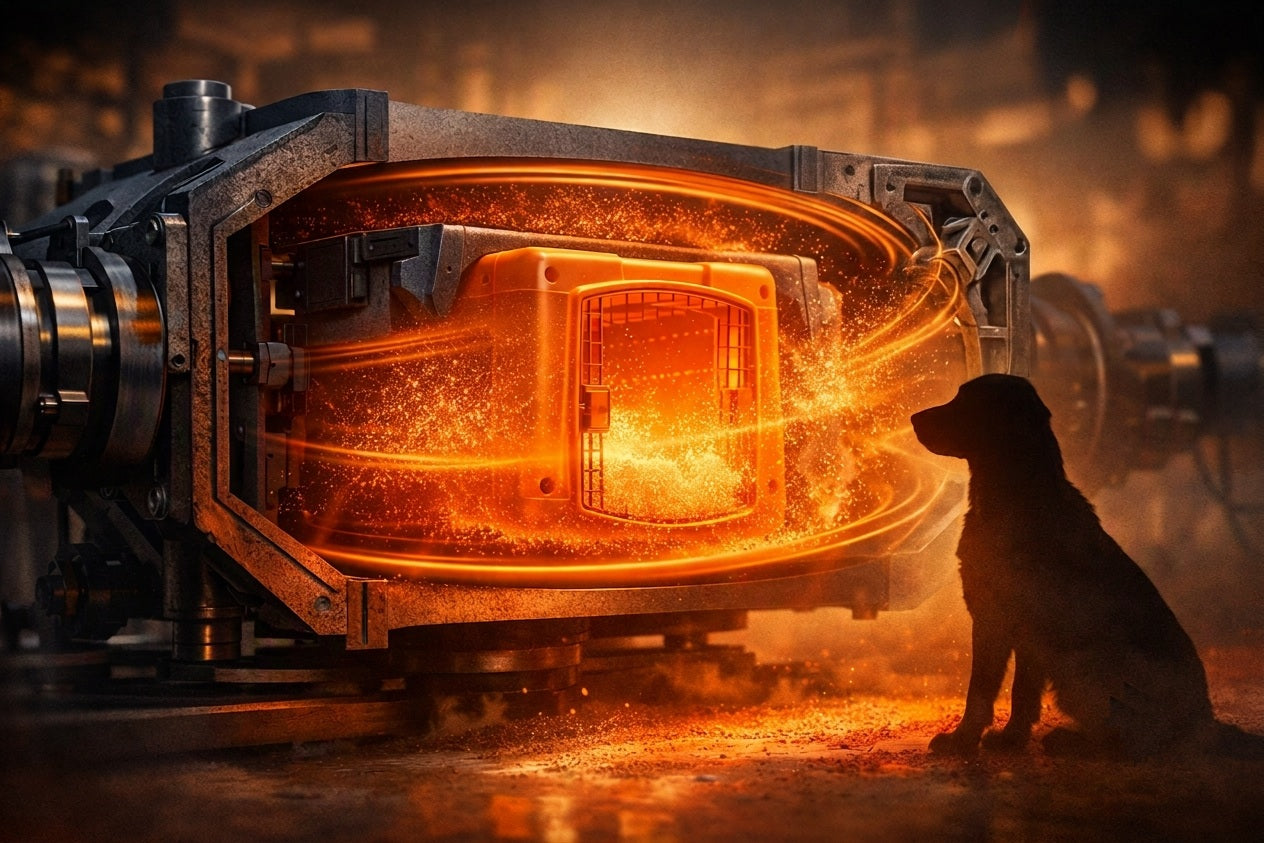
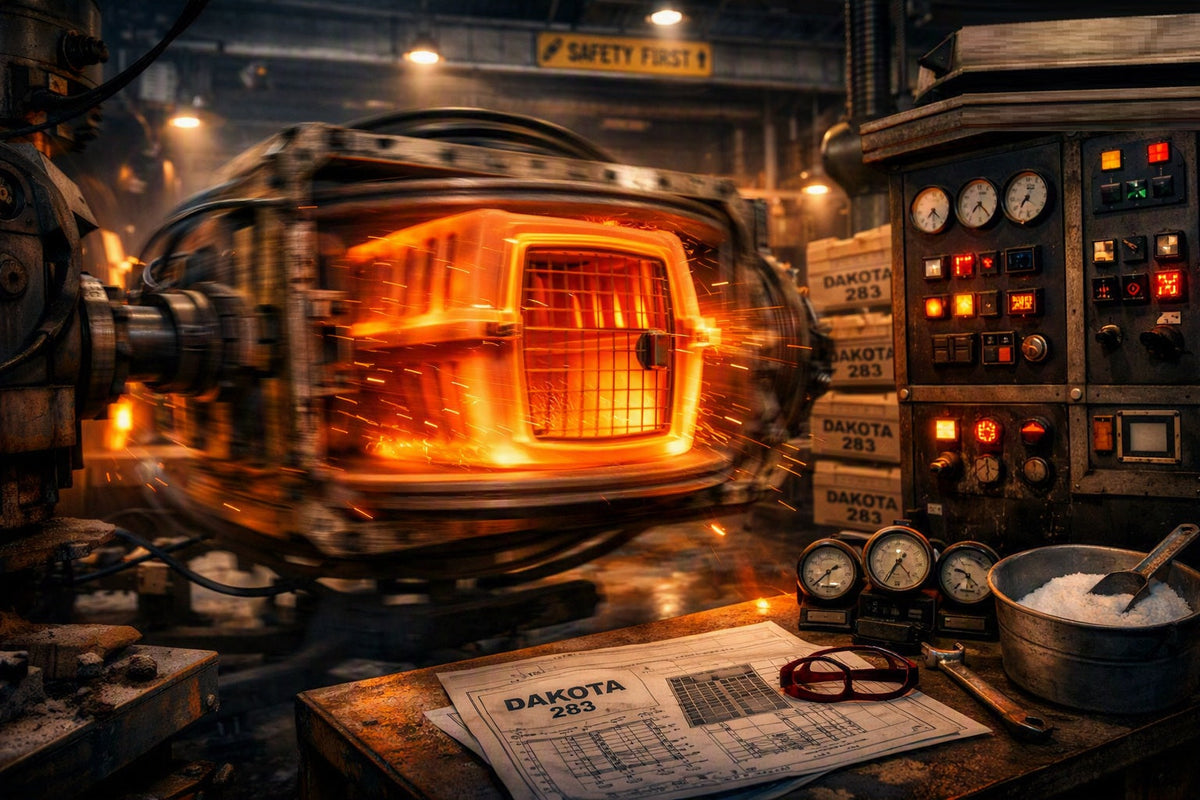
Rotomolding is a controlled thermal‑rotation process that transforms raw polyethylene powder into a single, seamless, impact‑resistant structure.
Inside the mold, four scientific forces work together:
1. Heat
The mold is heated until the polyethylene powder reaches its melting point. This heat allows the polymer chains to loosen and begin bonding.
2. Rotation
The mold rotates on two axes — horizontally and vertically — creating a tumbling motion. This ensures the molten polyethylene coats every surface evenly, including corners and structural ribs.
3. Adhesion
As the powder melts, it sticks to the mold walls and begins forming a uniform layer. This is where the crate’s consistent wall thickness is created — a key factor in impact resistance.
4. Cooling
The mold is cooled slowly and evenly. This controlled cooling prevents warping and allows the polymer chains to lock into a dense, solid structure.
The result? A dog crate with no seams, no joints, and no weak points — just one solid, durable piece.
Why Rotomolding Creates Superior Strength
1. One‑Piece Construction
Traditional crates are assembled from multiple panels. Every seam is a failure point. Rotomolded crates are formed as one continuous structure, eliminating structural weaknesses.
2. Even Wall Thickness
The rotation ensures polyethylene distributes evenly. This prevents thin spots — the #1 cause of cracking in injection‑molded crates.
3. Polymer Chain Bonding
During cooling, polymer chains interlock tightly. This creates a dense, rigid structure that resists impact, compression, heat, and UV exposure.
4. Structural Ribbing
Dakota 283 molds include internal ribbing channels. These ribs act like internal beams, distributing force across the crate body.
5. Controlled Flex Zones
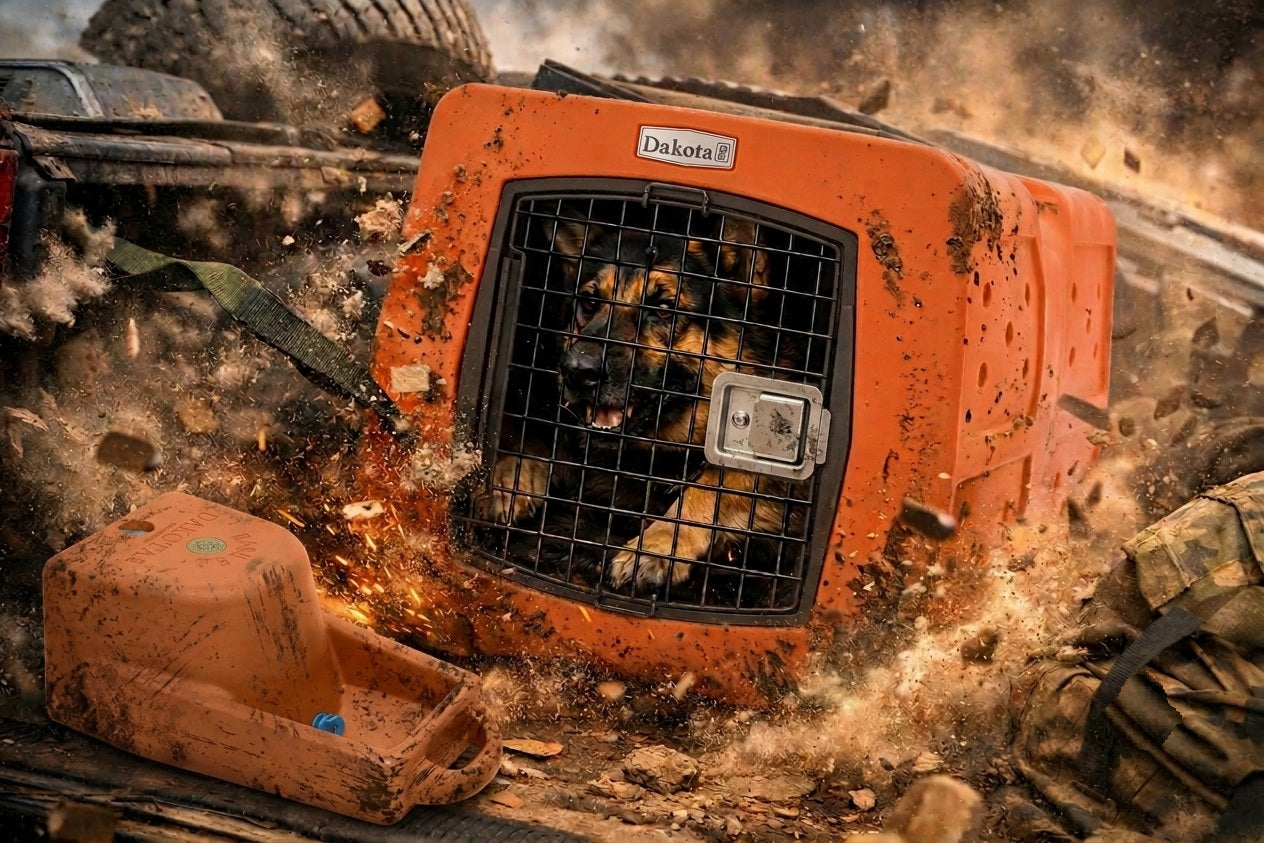
Rotomolded polyethylene flexes under pressure instead of shattering. This is why Dakota 283 crates survive rollovers, drops, truck‑bed vibration, and sudden stops.
Rotomolding vs Injection Molding: The Scientific Difference
| Feature | Rotomolding | Injection Molding |
|---|---|---|
| Construction | One‑piece, seamless | Multi‑panel assembly |
| Wall Thickness | Uniform | Often uneven |
| Impact Behavior | Flexes, absorbs force | Cracks at seams |
| Heat Resistance | High | Moderate |
| Longevity | 10+ years typical | 2–4 years typical |
| Vehicle Safety | Excellent | Poor |
Why Dakota 283 Uses Rotomolding for Crates
Dakota 283 crates are engineered for real‑world abuse. Their rotomolded construction provides:
- Crash‑resistant durability
- Truck‑bed stability
- UV and weather resistance
- Long‑term structural integrity
- Safe, secure containment for working dogs
This is why Dakota 283 crates are trusted by K9 units, hunters, ranchers, working dog handlers, and adventure travelers.
Q&A: The Science Behind Rotomolded Strength
What makes rotomolded crates stronger than plastic crates?
Rotomolded crates are made from one solid piece of polyethylene, eliminating seams and weak points that commonly fail in traditional plastic crates.
Why does the crate glow during the rotomolding process?
The polyethylene powder melts under high heat, creating a bright orange glow as it bonds to the mold walls and forms a seamless structure.
Does rotation really matter in rotomolding?
Yes. Rotation ensures even distribution of molten polyethylene, preventing thin spots and guaranteeing uniform wall thickness throughout the crate.
Why do rotomolded crates flex instead of breaking?
Polyethylene’s molecular structure allows controlled flex under impact, absorbing force instead of cracking or shattering like traditional plastics.
Is rotomolding more expensive than injection molding?
Yes, but the result is a crate that lasts 10 or more years, offering superior strength, safety, and long‑term durability compared to injection‑molded designs.
Why does Dakota 283 use rotomolding instead of injection molding?
Dakota 283 uses rotomolding because it produces a safer, stronger, and more durable crate ideal for vehicle travel, working dogs, and extreme environments.
The G3 models are offered with Dakota Guard antimicrobial or without and in a bundle with complementary accessories with the Dakota Guard antimicrobial or without Dakota Guard.