Pet owners are demanding more from travel kennels — not just comfort, but true impact resistance. Traditional wire crates and thin plastic kennels simply weren’t designed for vehicle travel, sudden stops, or collision forces.
Rotomolded dog crates like the Dakota 283 G3 have changed the standard entirely. Built using the same manufacturing process used for military cases and industrial equipment, these crates deliver vehicle‑grade protection that competitors struggle to match.
This guide explains exactly why rotomolded crates outperform injection‑molded kennels, how Dakota 283 engineering works, and why these crates are becoming the new safety benchmark for truck bed and SUV travel.
What Rotomolding Really Means — And Why It Matters
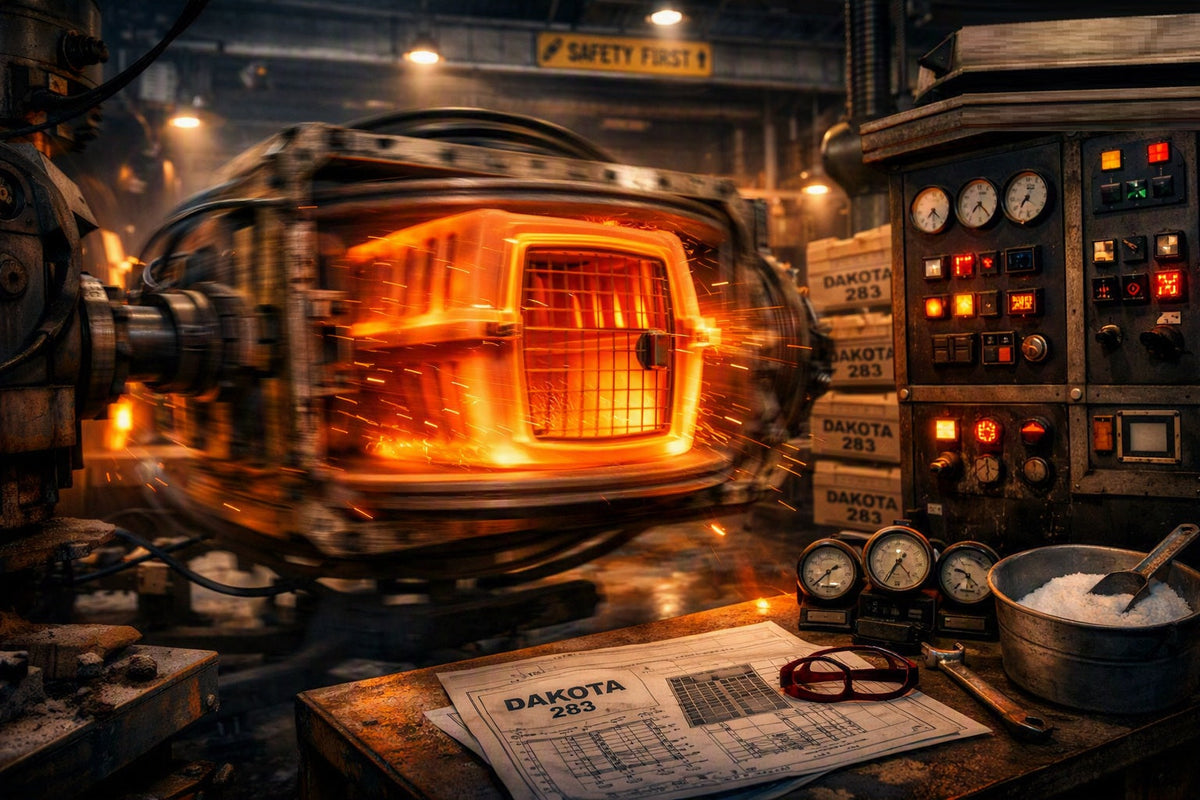
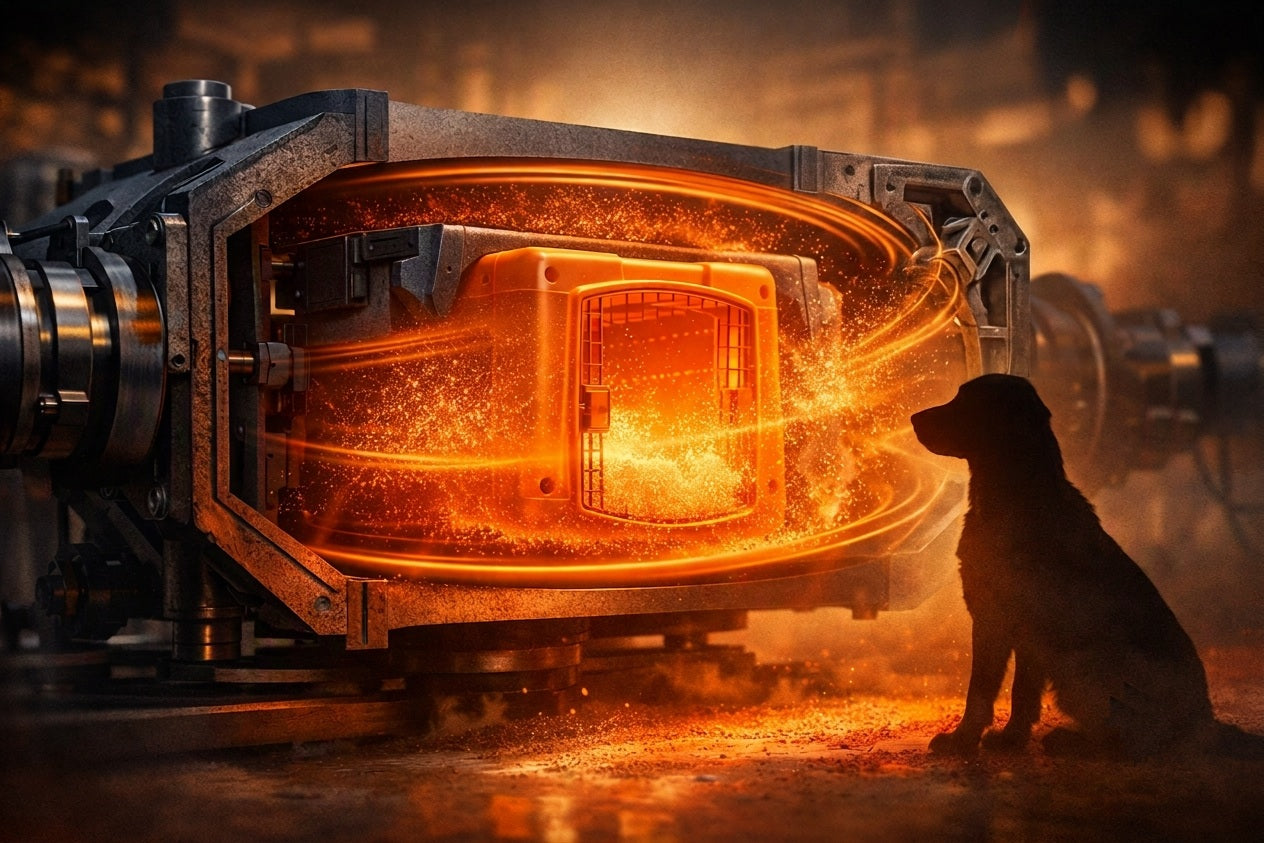
Rotational molding (rotomolding) is a manufacturing process where heated polyethylene powder is rotated inside a mold until it forms a single, seamless, solid piece.
This matters for safety because:
1. No Weak Points
Injection‑molded crates are made from multiple thin panels snapped or screwed together. Every seam is a failure point. Rotomolded crates have zero seams, zero joints, and zero stress points.
2. Uniform Wall Thickness
The rotating mold ensures the plastic distributes evenly, creating consistent thickness across the entire crate — including corners. This is why Dakota 283 crates don’t crack under pressure.
3. Flex‑But‑Don’t‑Fracture Behavior
Rotomolded polyethylene flexes under impact instead of shattering. It’s engineered to absorb and disperse force, not break.
4. Structural Integrity Under Load
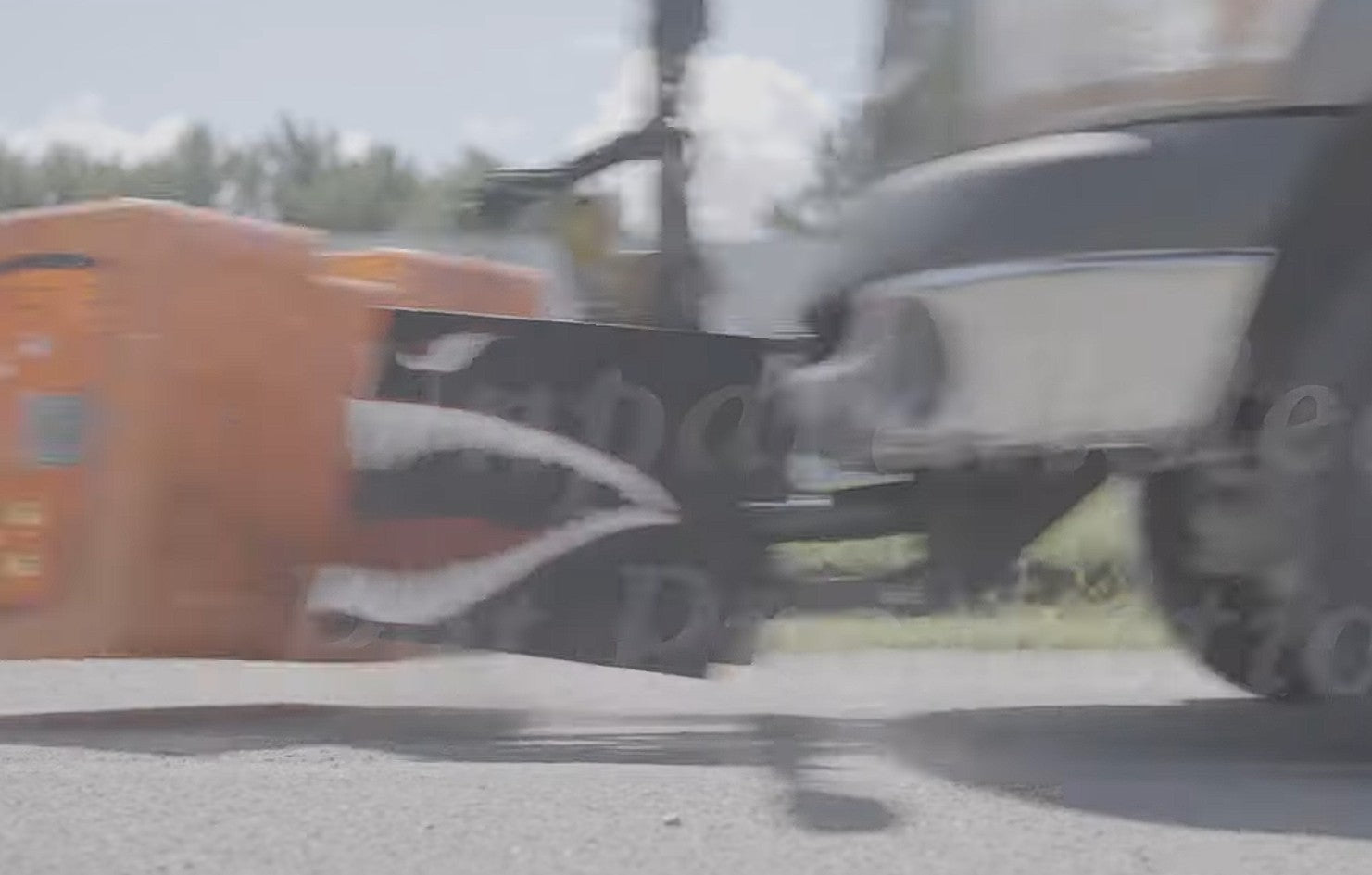
When a truck tire rolls over a rotomolded crate, the body compresses and rebounds. Injection‑molded crates simply collapse. This is why Dakota 283 crates survive real crash‑test scenarios.
Why Rotomolded Crates Dominate Vehicle Safety
1. Crash‑Resistant Construction
Dakota 283 crates have been run over by trucks, dropped from forklifts, slammed against barriers, and exposed to extreme heat and cold. The one‑piece body maintains its shape because the material is designed to flex under load without splitting.
2. Secure Tie‑Down Integration
Built‑in tie‑down holes allow you to anchor the crate to truck bed D‑rings, SUV cargo anchors, or trailer mounts. This prevents sliding, tipping, or rolling — the #1 cause of dog injury during vehicle travel.
3. Weatherproof and UV‑Resistant
Rotomolded polyethylene is naturally UV‑stable, moisture‑resistant, and temperature‑resistant. It won’t warp, crack, or weaken over time.
4. Low‑Profile SUV Fit
Models like the G3 and T1 are engineered to fit flush in SUV cargo areas while maintaining ventilation and structural strength.
5. Real‑World Durability
Dakota 283 crates are used by K9 units, ranchers, hunters, and working dog handlers who demand equipment that survives vibration, dust, weather, and impact — not just indoor use.
Rotomolded vs Injection‑Molded: The Safety Gap
| Feature | Rotomolded Crate | Injection‑Molded Crate |
|---|---|---|
| Construction | One‑piece solid body | Multi‑panel assembly |
| Impact Resistance | High — flexes under pressure | Low — cracks at seams |
| Longevity | 10+ years typical | 2–4 years typical |
| Weatherproofing | Fully sealed | Vulnerable at joints |
| Vehicle Safety | Designed for truck/SUV travel | Not designed for impact |
| Structural Failure Rate | Extremely low | High under load |
Why Dakota 283 Crates Are So Impact‑Resistant (Deep Engineering Breakdown)
1. Rotomolded Polyethylene
Dakota 283 uses high‑density polyethylene (HDPE), which has high tensile strength, high impact resistance, and high environmental durability. It’s the same material used in kayaks, military storage cases, and ATV body panels.
2. One‑Piece Molded Body
The crate is formed in a single mold — no screws, rivets, glued seams, or structural weak points. This is the #1 reason Dakota 283 crates outperform competitors.
3. Structural Ribbing
Internal ribbing channels reinforce the crate walls, acting like internal beams that distribute force across the entire body.
4. Controlled Flex Zones
The crate is designed to flex in specific areas during impact — similar to automotive crumple zones — while keeping the interior compartment stable.
5. Reinforced Door System
The stainless‑steel door and latch are mounted into a reinforced frame that prevents door blowouts, warping, or lock failure during sudden stops or rollover scenarios.
6. Tie‑Down Integration
The tie‑down holes are molded into the body — not drilled afterward — ensuring they remain strong under load.
Q&A: Rotomolded Dog Crates & Vehicle Safety
Are rotomolded dog crates safer than wire crates?
Yes. Wire crates collapse, bend, or break under impact. Rotomolded crates absorb force and maintain structural integrity.
Why are Dakota 283 crates so impact‑resistant?
Because they’re made from one solid piece of rotomolded polyethylene, engineered to flex under pressure instead of cracking.
Can I use a Dakota 283 crate in my truck bed?
Absolutely. They’re designed for truck bed travel and include tie‑down points for secure mounting.
Do rotomolded crates protect dogs during accidents?
They significantly reduce risk by preventing collapse, door failure, and sliding — the most common causes of injury.
Are Dakota 283 crates weatherproof?
Yes. They’re UV‑resistant, moisture‑resistant, and temperature‑stable.
Do they fit in SUVs?
The G3 and T1 models are engineered specifically for SUV cargo areas.
How long do rotomolded crates last?
10+ years is typical — many last far longer.