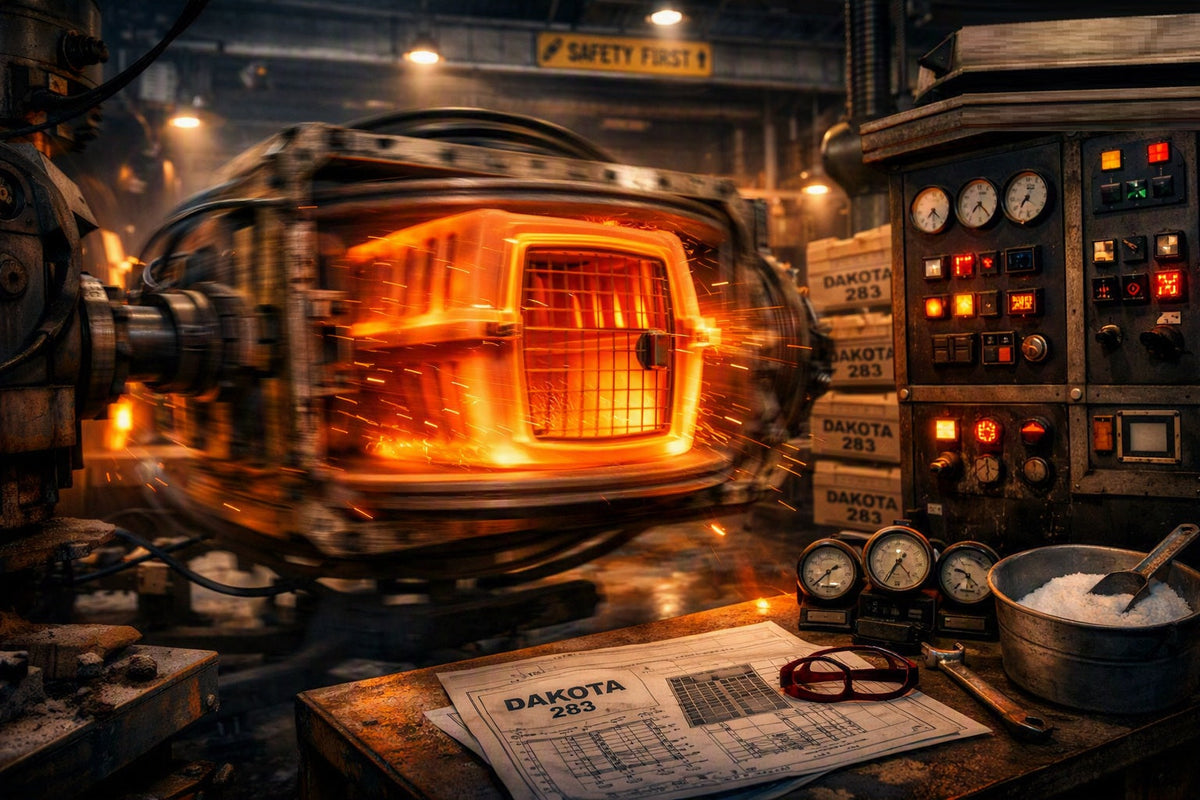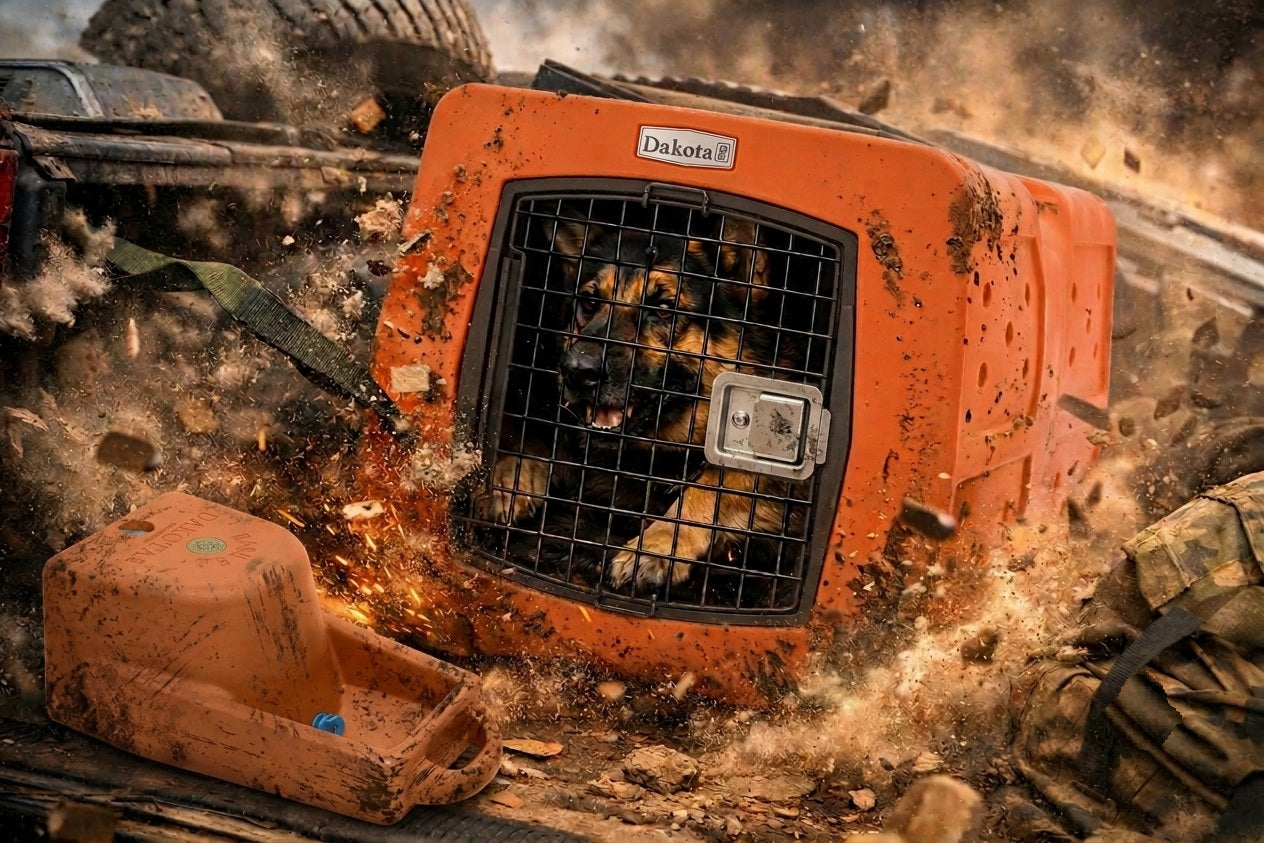
When you invest in a Dakota 283 crate, you’re not just buying a kennel — you’re buying engineering proven under pressure. Every crate is built to endure the kind of punishment that would destroy ordinary plastic kennels. From crash simulations to field tests in mud, heat, and cold, Dakota 283 crates are impact tested to prove their strength where it matters most: the real world.
The Meaning of “Impact Tested”
Impact testing isn’t marketing fluff — it’s a measurable process used in industrial design to evaluate how materials absorb and distribute force. Dakota 283 crates undergo controlled tests that simulate:
- Vehicle collisions and rollovers
- Drops from truck beds and loading docks
- Extreme temperature cycles
- UV exposure and material fatigue
Each test measures how the rotomolded polyethylene reacts under stress — flexing, absorbing, and redistributing energy instead of cracking or shattering.
Crash-Test Proven Durability
Dakota 283 crates have been subjected to crash simulations using weighted dummies and high-speed impact rigs. The results are consistent: the one-piece rotomolded shell maintains structural integrity even when subjected to forces exceeding typical vehicle collisions.
Why it matters: In a sudden stop or rollover, a crate that flexes instead of fractures protects your dog from flying debris and collapsing panels.

Environmental Stress Testing
Real-world abuse doesn’t stop at impact — it’s about endurance. Dakota 283 crates are tested for:
- Thermal shock: rapid temperature changes from freezing to scorching heat
- UV degradation: prolonged exposure to sunlight without fading or brittleness
- Moisture resistance: no warping or delamination after repeated soaking and drying cycles
This testing ensures the crate performs consistently whether it’s mounted in a truck bed in Arizona or stored outdoors in Idaho winters.
Rotomolded Strength in Action
The rotomolding process creates a uniform wall thickness and internal ribbing that act like shock absorbers. When impact occurs, energy disperses through the entire structure — not concentrated at seams or joints.
That’s why Dakota 283 crates can withstand:
- Drops from over 10 feet
- Direct hammer strikes
- Heavy compression loads
- Repeated vibration from off-road travel
Each crate flexes slightly, then returns to its original shape — a hallmark of true rotomolded engineering.
Field-Tested by Professionals
Dakota 283 crates aren’t just tested in labs — they’re proven in the field by:
- K9 units who rely on them for transport safety
- Hunters and ranchers who expose them to mud, dust, and rough terrain
- Search-and-rescue teams who need gear that survives harsh conditions
Their feedback drives continuous improvements in latch design, ventilation, and tie-down systems.
Find a Dakota 283 kennel that meets your needs.
Rotomolded vs. Traditional Crates: Real-World Comparison
| Test Type | Rotomolded Crate | Traditional Plastic Crate |
|---|---|---|
| Drop Test | No cracks or deformation | Panels separate, corners fracture |
| Crash Simulation | Maintains structure | Collapses under pressure |
| UV Exposure | No fading or brittleness | Surface chalks and weakens |
| Temperature Cycling | Stable performance | Warps and splits |
| Vibration Test | No rattling or seam fatigue | Hinges loosen, panels flex |
Q&A: Understanding Impact Testing
What does “impact tested” mean for dog crates?
It means the crate has been subjected to controlled physical stress to measure how well it withstands real-world forces like collisions, drops, and vibration.
How are Dakota 283 crates tested?
Through crash simulations, drop tests, and environmental exposure trials that replicate years of use in extreme conditions.
Why do rotomolded crates perform better?
Their one-piece polyethylene structure flexes under impact, absorbing force instead of cracking at seams.
Can a Dakota 283 crate survive a truck rollover?
Yes — tests show the crate maintains its shape and integrity even under rollover-level compression.
Does impact testing affect warranty or certification?
It reinforces Dakota 283’s confidence in their design — every crate is backed by a lifetime warranty against structural failure.