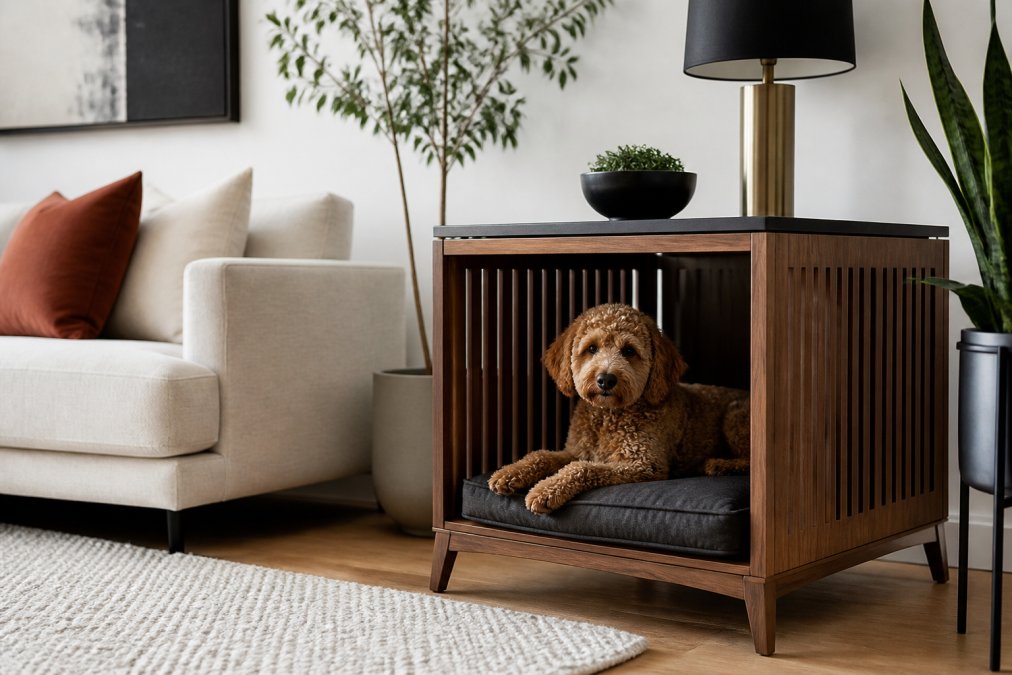
Article: Luxury Indoor Dog House Design: 2026 Style Guide
Luxury Indoor Dog House Design: 2026 Style Guide
Table of Contents
- What Luxury Indoor Dog House Design Actually Means in 2026
- Luxury Dog House Interior Ideas That Blend With Your Home
- Modern Pet Furniture Design: Materials, Finishes, and What Lasts
- Custom Built-In Dog Crates: Space-Saving Integration Done Right
- Luxury Indoor Dog House Options and Price Breakdown
- Comfort, Ergonomics, and Climate Control for Your Dog
- Cleaning, Maintenance, and Smart Home Integration
- DIY vs. Professional Commissioning: Which Route Fits You
- Frequently Asked Questions
Last Updated: September 19, 2026
What Luxury Indoor Dog House Design Actually Means in 2026
Luxury indoor dog house design means building a dog's living space as permanent, architecturally integrated furniture rather than a plastic crate you hide when guests arrive. The category has moved past "expensive kennel" into commissioned cabinetry: real hardwood, joinery that holds up for a decade, and proportions drawn to match the room. Below, we break down the materials, dimensions, safety standards, and price tiers that separate a genuine luxury indoor dog house from a marked-up wire crate in a wooden box.

The three ideas that define the category:
- Architectural integration. The piece reads as a console, credenza, or built-in, not as pet equipment.
- Material honesty. Solid reclaimed wood, metal hardware, and upholstery that can be cleaned and replaced.
- Ergonomics for the dog. Interior dimensions, ventilation, and cushion support designed around the animal, not the aesthetic.
Luxury Dog House Interior Ideas That Blend With Your Home
The most reliable way to blend a dog house into your interior is to match the furniture you already own, not a "pet" color palette. Three approaches work:

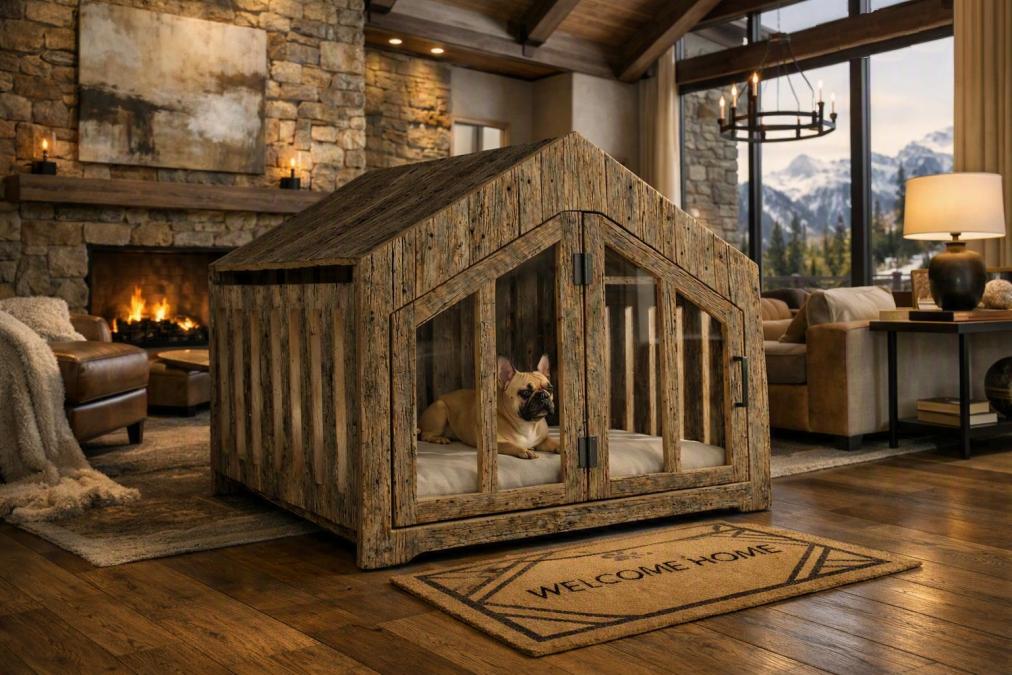
- Designer crate interiors. A furniture crate with glass-panel double doors and vertical slat ventilation reads as a display cabinet. Add a bone-shaped nameplate for a personalized touch.
- Console and hutch conversions. A dual-compartment hutch with an integrated feeding drawer and storage replaces both a crate and a sideboard.
- Statement pieces. A weathered hardwood hutch with bronze hardware suits lodge, farmhouse, and modern rustic rooms where timber beams or stone fireplaces already exist.
Designer Crate Interiors: Bedding, Lighting, and Nameplates
Bedding is where most luxury indoor dog house interior ideas quietly fail. A removable orthopedic cushion with a washable cover matters more than the frame finish, because it's what your dog actually touches. Look for:
- A cushion you can pull out without disassembling the crate
- Ventilated slats or panels for airflow, not solid walls
- Quiet hardware, since rattling latches defeat the purpose of an indoor piece
- A nameplate or similar detail that makes the piece feel commissioned rather than bought
Modern Pet Furniture Design: Materials, Finishes, and What Lasts
Modern pet furniture design lives or dies on two decisions: the wood and the finish. Reclaimed barn wood brings natural variation in grain, tone, and aging pattern, so no two pieces match exactly, a feature, not a defect.
Safe Paint, Stain, and Non-Toxic Finish Standards
This is the part most buyers get wrong, and it matters most for a dog that will chew, lick, and sleep against the surface for years. A finish that looks beautiful in a showroom photo can off-gas for weeks in a closed room, right at a dog's nose height.
- VOC content. Volatile organic compounds are the solvents that evaporate from paint, stain, and clear coat. Low-VOC and zero-VOC products are widely available, and the label states the level in grams per liter. Lower is better for an enclosed indoor piece.
- Cure time, not dry time. A finish can feel dry in hours but keep curing, and off-gassing, for days or weeks. Water-based polyurethanes and hardwax oils cure faster and emit less than solvent-based lacquers. Ask the maker for the cure window before shipping; don't accept "it's dry."
- What to avoid. Solvent-heavy conversion varnishes and oil-based stains that still smell after two weeks are wrong for a dog house, no matter how good the grain looks. If you can smell the finish across the room, it isn't ready for a dog.
- Sealants and adhesives. Wood sealants, glues, and edge banding are part of the finish system. A non-toxic wood sealant and low-emission adhesive matter as much as the topcoat, because they sit under the surface the dog contacts.
How to Verify a Finish Before You Buy
You don't need a lab. You need three questions and one test:
- Ask what finish is used and its VOC level.
- Ask how long it cures before shipping. Anything under a few days for a solvent-based product deserves scrutiny.
- Ask whether interior surfaces are finished the same as the exterior. Some builders cut corners inside, where the dog actually lives.
- Do the smell test on arrival. Unbox in a well-ventilated space. If it still smells strongly of solvent after a day of airing, let it cure longer before your dog uses it.
Materials That Survive a Dog
Finish is half the equation; substrate is the other half. Key trade-offs:
- Solid hardwood (oak, maple, walnut) resists denting and can be sanded and refinished if scratched, the most repairable option.
- Reclaimed barn wood offers character but varies in hardness; softer boards can dent under a large dog's weight.
- Plywood and MDF are stable and cheaper, but can't be refinished and swell if moisture reaches the core, a failure point in humid rooms.
- Metal hardware should be solid brass, bronze, or powder-coated steel. Thin decorative plating corrodes first where saliva and water bowls meet the surface.
Custom Built-In Dog Crates: Space-Saving Integration Done Right
Custom built-in dog crates work best sized to the dog first, cabinetry second. Get the interior dimensions right, then design the surround around them.
Size |
Dog Weight |
Interior (L × W × H) |
Door Opening |
|---|---|---|---|
Small |
Up to 20 lbs |
23" × 18" × 21" |
10" × 14" |
Medium |
20-45 lbs |
29" × 22" × 25" |
12" × 16" |
Large |
45-75 lbs |
37" × 28" × 31" |
14" × 20" |
Luxury Indoor Dog House Options and Price Breakdown
Prices in this category track materials and complexity, not size alone. Here's how the tiers actually break down:
Barnwood Manor Luxury Indoor Dog House →
Option |
Price |
Best For |
|---|---|---|
$1,625.00 |
First luxury piece; living rooms and offices |
|
$5,225.99 |
Design-led homes; elevated or ground-level placement |
|
$5,559.99 |
Multi-dog households needing storage and feeding |
|
$6,989.99 |
Lodge and estate interiors; heirloom builds |
Comfort, Ergonomics, and Climate Control for Your Dog
Comfort comes down to three variables: interior volume, cushion support, and airflow. A dog needs enough height to stand without ducking and enough length to lie fully stretched. Vertical slat ventilation handles airflow; if the crate sits against an exterior wall in a cold room, add a climate-controlled option.

Cleaning, Maintenance, and Smart Home Integration
Maintenance is straightforward if you plan for it at purchase, and smart home integration is where this category is heading. A luxury indoor dog house is furniture that also houses an animal, so it collects hair, dander, odor, and moisture in ways a credenza never will.
Cleaning and Maintenance Protocols
A weekly routine keeps a luxury structure hygienic without damaging the finish:
- Cushion and bedding. Removable, washable covers handle most of the day-to-day. Wash weekly for heavy shedders, every two weeks otherwise, and keep a spare cover so the piece is never out of service. Spot-clean orthopedic foam cores, never soak them, and air them in sunlight when possible.
- Interior surfaces. Wipe with a damp cloth and mild, pet-safe cleaner. Avoid ammonia-based products, which can encourage a dog to mark the same spot again, and abrasive pads that dull the finish.
- Solid wood. A damp cloth and occasional pet-safe wood conditioner, never a soaking. Standing water damages wood, not the wipe itself.
- Metal hardware. Wipe dry after cleaning. Standing water, not the metal, causes corrosion, and it pools in latches and hinges near water bowls.
- Odor control. Baking soda sprinkled on the cushion and vacuumed after 15 minutes neutralizes odor without fragrance. Skip scented sprays, which mask rather than remove and can irritate a dog's respiratory system.
- Deep clean cadence. Once a season, pull the cushion, vacuum interior corners, wipe the slats on both sides, and check every screw and latch for tightness. A dog leaning on a loose latch is how hardware fails.
Smart Home Integration: Climate, Air, and Monitoring
Smart home integration is where this category is heading. The practical build-out:
- Climate control. A smart plug paired with a pet-safe heated pad warms the interior on a schedule or on demand. For cooling, a small fan drawing air across the slats, not blowing directly on the dog, moves air without a draft.
- Air filtration. A compact HEPA air purifier near the crate reduces dander and odor.
- Monitoring. A pet camera mounted above the slats or on an adjacent shelf gives you a view without drilling into the frame. Look for two-way audio and night vision.
- Automation. A smart plug on a schedule handles the heated pad; a smart sensor alerts you to temperature swings. Keep it simple, one plug, one sensor, one camera is enough for most homes.
Safety Rules for Any Smart Setup
Smart home features are only as safe as their wiring. Follow these rules without exception:
- Route cables behind the piece and away from the interior. A cord the dog can reach is a cord the dog can chew.
- Never place a heat source where the dog can reach the cord or element. A heated pad goes under the cushion, not on top.
- Use a smart plug rated for the load. A heated pad draws more than a phone charger; an underrated plug is a fire risk.
- Keep the camera and its cable outside the crate. Mount above or beside, never inside where it can be pulled down.
- Test the setup before leaving the dog alone with it. Run the heated pad on schedule for a day while you're home, then check the interior temperature before trusting it unattended.
DIY vs. Professional Commissioning: Which Route Fits You
A maker who builds these pieces daily knows the interior dimensions that fit a breed, uses joinery that survives a dog leaning on it, and finishes the wood properly before shipping. You get a warranty, a replacement path for hardware, and a piece sized to your room.
Frequently Asked Questions
What features define a luxury indoor dog house?
A luxury indoor dog house typically combines furniture-grade construction, premium materials such as reclaimed hardwood or weather-resistant siding, and comfort features like orthopedic cushions and ventilation. Design details matter too: glass-panel doors, customizable nameplates, and finishes that match your interior. Climate-controlled options and quiet hardware add to the experience. The goal is a piece that serves your dog's comfort while functioning as intentional home decor rather than a hidden crate.
How do I choose the right size indoor dog house for my pet?
Measure your dog from nose to tail and add a few inches of clearance. Your dog should be able to stand, turn around, and lie down fully extended. For example, a large furniture crate with interior dimensions around 37 inches long and 28 inches wide suits dogs from 45 to 75 pounds. If your dog is between sizes, size up. A crate that is too small defeats the comfort purpose, and one that is far too large can feel less secure.
Can custom built-in dog crates be integrated into existing furniture?
Yes. Custom built-in dog crates are often designed as console tables, end-of-bed units, or under-window benches that double as dog spaces. A professional commission lets you match wood species, stain, and hardware to your existing cabinetry. Built-in designs save floor space and keep sightlines clean. The key is planning ventilation, door swing clearance, and cushion access before fabrication begins so the finished piece works for both your home and your dog.
Are luxury indoor dog houses worth the investment?
It depends on how you weigh durability, design, and daily use. A furniture-grade piece like the Barnwood Manor at $1,625 or the Tahoe Estate Heirloom Hutch at $6,989.99 replaces a standard crate and a side table at once, and reclaimed hardwood construction is built to last years rather than months. If your dog spends hours in the crate daily and your home has a curated aesthetic, the cost per use and the visual payoff often justify the price.