
Premium Dog House Construction Quality: 2026 Review
Last Updated: October 23, 2026
Quick Summary
Premium dog house construction quality is measured by the thermal envelope, roof assembly, flooring substrate, and hardware, not by finish or color. At Dogominium we build to residential standards with R-11 or R-13 insulation, 30-year architectural shingles or metal roofing, polyurea flooring, and Trusscore wallboard. These four variables predict how a kennel performs in year five far better than the brochure does.
- Compare kennels on wall section, floor substrate, roof venting, and hardware rather than color or trim.
- R-13 insulation resists heat transfer roughly 18 percent better than R-11, which matters in cold climates.
- The best roof material is a 30-year architectural shingle over a properly vented deck, with metal as the upgrade.
- Executive Estate models range from $6,584.99 for the 4' x 8' to $14,782.99 for the 8' x 12'.
- Sealing a dog house too tightly is the most common DIY mistake; moisture then condenses on the ceiling and drips.
Table of Contents
- What Premium Dog House Construction Quality Actually Means
- Construction Quality Comparison: Five Models Side by Side
- The Best Material to Build a Dog House From
- Insulated Dog Houses: Why R-11 and R-13 Matter
- The Best Dog House Roof Material for Weather Protection
- What Each Kennel Costs and Who It Fits
- How to Judge Build Quality Before You Buy
- Verdict: Where Premium Construction Quality Pays Off
- Frequently Asked Questions
What Premium Dog House Construction Quality Actually Means
Premium dog house construction quality is the measurable difference between a shelter that lasts one winter and one that performs like a small residential structure for a decade or more.
The stakes are real. As Texas A&M University College of Veterinary Medicine & Biomedical Sciences notes in its guidance on building the ideal dog house, an effective dog house protects a dog from extreme temperatures, wind, rain, snow, and even potential predators.
Below, we break down what separates premium construction from consumer-grade, compare five Executive Estate models, and give you a checklist for any kennel.
Construction Quality Comparison: Five Models Side by Side
Every Executive Estate model shares the same core build: wood-frame assembly, R-11 or R-13 insulation, 30-year architectural shingles or metal roof, polyurea flooring, and Trusscore wallboard.
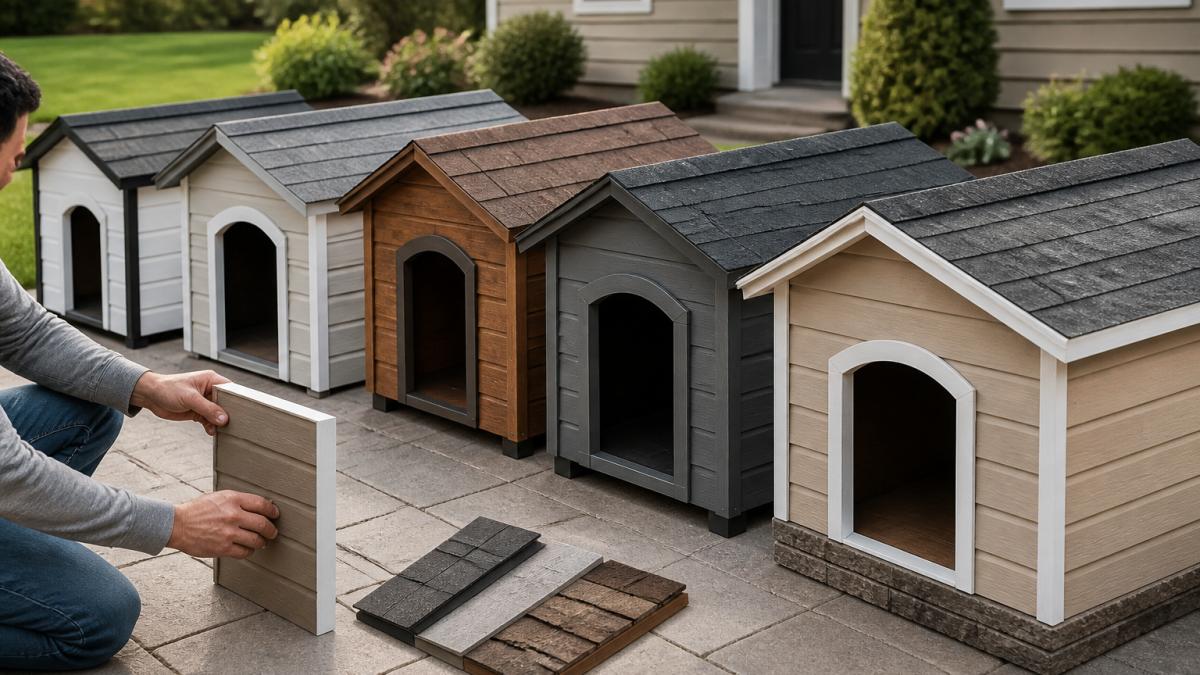
| Model | Footprint | Starting Price | Wall Insulation | Floor Build | Roof Assembly | Door & Hardware | Best Fit |
|---|---|---|---|---|---|---|---|
| Executive 4' x 8' | 32 sq ft | $6,584.99 | R-11 batt | Spray-foam over moisture-resistant substrate, polyurea topcoat | Vented deck, 30-year architectural shingle | Chew-resistant frame, standard-replacement hinges | Single medium dog, compact yard |
| Executive 6' x 8' | 48 sq ft, 9' high | $9,124.99 | R-11 batt | Spray-foam over moisture-resistant substrate, polyurea topcoat | Vented deck, 30-year architectural shingle | Chew-resistant frame, standard-replacement hinges | One large dog, full headroom |
| Executive 6' x 10' | 60 sq ft | $10,484.99 | R-13 batt | Spray-foam over moisture-resistant substrate, polyurea topcoat | Vented deck, 30-year architectural shingle or metal | Chew-resistant frame, standard-replacement hinges | Two dogs or a large breed with run space |
| Executive 8' x 10' | 80 sq ft | $12,314.99 | R-13 batt | Spray-foam over moisture-resistant substrate, polyurea topcoat | Vented deck, 30-year architectural shingle or metal | Chew-resistant frame, standard-replacement hinges | Giant breeds, multi-dog households |
| Executive 8' x 12' | 96 sq ft | $14,782.99 | R-13 batt | Spray-foam over moisture-resistant substrate, polyurea topcoat | Vented deck, 30-year architectural shingle or metal | Chew-resistant frame, standard-replacement hinges | Multiple dogs, storage or feeding room |
The 6' x 8' is a popular model.

What to compare beyond the sticker
Use these five criteria to compare any two kennels:
- Wall section and panel thickness. Ask for wall thickness and insulation rating in writing. A 2x4 wall with R-11 batt differs from a thin foil-faced panel, even if both are marketed as insulated.
- Joinery and fasteners. Look for screwed or nailed assemblies with corrosion-resistant fasteners, not staples. Staples back out with freeze-thaw movement and leave paths for water.
- Floor elevation and substrate. The floor should sit above grade on a frame or skids, not on soil. A moisture-resistant substrate under polyurea resists hosing and urine; bare plywood does not.
Climate and breed fit by model
Construction choices should follow the dog and the climate. A short-coated breed in a cold climate benefits from the R-13 wall and spray-foam floor in the 6' x 10' and larger models. A thick-coated breed in a mild climate may do fine in the 4' x 8' with R-11, provided the roof is vented and the floor is elevated. If you are unsure which model fits, our Custom Built Dog House collection walks through sizing and configuration.
Total cost of ownership
Sticker price is only the first number. Delivery, site preparation, electrical rough-in, and permits add to installed cost. A premium build with a vented roof, elevated floor, and replaceable hardware needs fewer repairs than a budget kennel, where roof seams and floor edges fail first. Compare on installed cost plus expected repair history, not purchase price alone.
The Best Material to Build a Dog House From
The best material to build a dog house from is a wood-frame assembly clad in LP siding or board-and-batten, insulated in the walls and floor, and roofed in architectural shingles or metal.
Wood construction wins for three reasons: it holds insulation batts without compressing them, accepts real hinges and hardware, and can be refinished rather than replaced.
Aluminum has a place in hot, dry climates where rot is the main enemy, but bare metal radiates heat and conducts cold.
Material comparison at a glance
| Material | Insulation compatibility | Rot and moisture behavior | Fastener and hardware hold | Best use |
|---|---|---|---|---|
| Wood frame with siding | Holds batt insulation without compression | Good when elevated, vented, and finished; poor if sealed tight | Excellent; accepts standard hinges and latches | Most climates, most breeds |
| Composite or plastic panel | Limited; often foil-faced only | Resists rot but can trap condensation | Fair; hardware can pull out over time | Mild climates, short-term use |
| Metal with thermal break | Good if interior is insulated | Resists rot; condensation risk on cold surfaces | Good with proper framing | Hot, dry climates; wildfire exposure |
| Bare metal, uninsulated | Poor | Condensation and heat transfer | Fair | Not recommended for outdoor shelter |
Safety and non-toxic finishes
A dog will chew, lick, and lie against every surface inside its house, so material selection is a safety decision as much as a durability one. Specify low-VOC finishes labeled safe for animal contact, and avoid treated lumber where the dog can chew unless rated for direct animal exposure. Ease sharp edges on door frames and corners. Keep heaters, fans, and air conditioners on a dedicated circuit with a breaker, routed so the dog cannot reach the cord, and installed per the manufacturer's instructions and local electrical code.
Ventilation and moisture management
Moisture is the quiet killer of dog houses. A dog's breath and body heat add water vapor to the interior air; if it cannot escape, it condenses on the coldest surface, usually the ceiling or roof deck, and drips back onto the dog and floor. The fix is deliberate ventilation: a vented soffit, gable vent, or powered exhaust fan on a timer, paired with drainage and a floor elevated above a site graded to run water away.
How to inspect a material claim before you buy
Ask three questions of any kennel, ours included. What is the wall assembly, frame size, sheathing, and insulation rating, in writing? How is the floor built, and is the substrate moisture-resistant under the topcoat? How is the roof deck vented, and what grade are the shingles? A seller who can answer all three has built to a standard; one who answers only in adjectives has not.
Insulated Dog Houses: Why R-11 and R-13 Matter
Insulated dog houses hold a stable interior temperature instead of tracking the outdoor reading.
What insulation actually does is reduce the swing.
Our builds pair batt insulation in the walls with spray foam in the floor. That floor layer is the one buyers overlook.
For climate control, we offer residential-grade HVAC options, powered ventilation, and integrated lighting. An exhaust fan with a timer moves air in summer without leaving the structure open.
Executive Luxury Insulated Customized Dog Kennel - 4' × 8' →
The Best Dog House Roof Material for Weather Protection
The best dog house roof material is a 30-year architectural shingle over a properly vented deck, with metal as the upgrade for heavy snow load or wildfire exposure.
Roof quality is where budget kennels cut most aggressively. A thin felt strip stapled to a plywood lid fails within a few seasons: water finds the seams, the deck delaminates, and the interior stays damp.
Metal roofing sheds snow and reflects summer sun, which helps thermal performance. The tradeoff is noise in rain and hail.
What Each Kennel Costs and Who It Fits
Pricing tracks footprint and climate package, not cosmetics. Our range runs from $6,584.99 for the 4' x 8' to $14,782.99 for the 8' x 12', and each step up buys square footage, not a better build.

Think about total cost of ownership rather than sticker price. Boarding and daycare carry recurring fees, holiday surcharges, and late pickup penalties.
Size selection is where buyers get it wrong most often. A dog needs room to stand, turn around, and lie stretched out, plus a few inches of margin.
If you want the full picture on sizing and configuration, our Custom Built Dog House collection walks through the options.
How to Judge Build Quality Before You Buy
Judge build quality by inspecting four things: the wall section, the floor substrate, the roof assembly, and the door hardware. Ask for the insulation rating in writing, what the floor is made of, and how the roof deck is vented.
Run this checklist on any kennel, ours included:
- Insulation rating stated in writing (R-11 or R-13 minimum)
- Floor is a moisture-resistant substrate, not bare plywood
- Interior walls can be rinsed without swelling or rotting
The flooring question separates serious builds from pretty ones. Our units use polyurea flooring and Trusscore wallboard, which can be hosed out repeatedly without rot. Plywood chips and splinters, and once water reaches the edge, the whole panel is compromised.
Verdict: Where Premium Construction Quality Pays Off
Premium construction quality pays off in the seasons you do not think about: the ice storm, the week of triple-digit heat, the month you travel for work.
If you have a single medium dog and a mild climate, the 4' x 8' Executive covers the essentials at $6,584.99. If you have a large or giant breed, or live where winters bite and summers bake, the 6' x 8' at $9,124.99 and up is where the climate-control package starts earning its keep.

We build to residential standards because the alternative is replacing the structure in a few years.
The hard part is not finding a dog house. It is knowing which one will still be standing, dry and warm, five winters from now.
Frequently Asked Questions
How can you tell if a dog house is well built?
Check five things. First, the wall assembly: a premium dog house uses a full thermal envelope rather than thin panels. Second, the roof: 30-year architectural shingles or a metal roof, not rolled roofing. Third, the floor: polyurea coating or composite decking that resists rot, not bare plywood. Fourth, the hardware and doors: chew-resistant options that still close cleanly after years of use. Fifth, the electrical and ventilation setup, including gable vents and an exhaust fan. Ask for the insulation rating (R-11 or R-13) in writing before you order.
What is the best material to build a dog house from?
For a premium outdoor dog house, the answer is a layered wall assembly rather than one material. Polyurea flooring and Trusscore wallboard, with spray foam and battens for insulation, and modern architectural design on the exterior all hold up better than thin consumer-grade panels. Inside, Trusscore wallboard and a polyurea floor coating let you rinse the interior without rot. Wood alone is not the deciding factor; how the layers are sealed and finished is what separates premium construction from a kit.
Does a premium dog house need insulation?
Yes, if the dog spends real time outdoors in heat or cold. The Executive Estate line uses R-11 or R-13 insulation plus spray foam under the floor, which slows heat transfer from the ground. Dr. Sarah Griffin at Texas A&M University College of Veterinary Medicine & Biomedical Sciences notes that an effective dog house protects dogs from extreme temperatures, wind, rain, snow, and potential predators. Insulation is what makes temperature regulation possible; without it, a heated interior loses its warmth and a cooled interior loses its chill.
What material is best for a dog house roof?
30-year architectural shingles and standing-seam metal are the two strongest choices for a premium outdoor dog house. Architectural shingles match residential roofing, shed rain and snow well, and carry a long service life. Metal roofs handle heavy snow loads and reflect summer heat. Both beat rolled asphalt or plastic panels, which crack and curl within a few seasons. Whichever you pick, confirm the roof deck is solid and the flashing is installed the way it would be on a house.
Is it cheaper to buy or build a premium dog house?
Building yourself is usually cheaper on materials but costs time, tools, and mistakes. A residential-grade build with R-13 insulation, architectural shingles, electrical rough-in, and a polyurea floor is a multi-week project for most homeowners. Dogominium's Executive Estate models run from $6,584.99 for the 4' x 8' to $14,782.99 for the 8' x 12', and that price includes the engineering, the electrical package, and the finished interior. Compare that against boarding fees, which can run into the thousands per year, and the math often favors buying.