Why Ventilation Matters in a Dog House: Airflow Engineering in Luxury Dog Dwellings
In a true luxury dog dwelling, comfort isn’t just about insulation, climate control, or architectural beauty — it begins with air itself. Ventilation is the invisible system that determines whether a dog’s environment feels fresh, balanced, and healthy, or stagnant and stressful. In high‑performance animal structures, airflow engineering is considered as essential as insulation or HVAC, because it directly affects respiratory health, humidity levels, odor control, and long‑term structural durability.
Properly designed airflow reduces contaminants, prevents moisture buildup, and stabilizes temperature — all critical for canine wellness. In a luxury dog estate, that level of performance is not optional; it’s part of the promise.
The science behind airflow engineering
Modern animal‑care design emphasizes fresh air dilution, air distribution, mechanical zoning, exhaust placement, filtration, and dehumidification — all working together to create a stable, healthy environment.
In luxury dog dwellings, these principles translate into:
- Consistent fresh‑air intake
- Controlled exhaust pathways
- Balanced humidity
- Even air distribution with no “dead zones”
- Energy‑efficient mechanical support
These are the same concepts used in veterinary hospitals and high‑end boarding facilities — adapted to residential luxury for a single dog or a multi‑dog household.
Why fresh air matters more than you think
Dogs experience the world through scent and breath. Poor ventilation allows dust, dander, ammonia, and moisture to accumulate, which can lead to respiratory irritation, stress, and a generally uncomfortable environment.
Fresh air circulation:
- Reduces airborne contaminants
- Prevents odor buildup
- Supports respiratory comfort
- Helps regulate temperature
- Keeps the environment psychologically calming
In a luxury dwelling, this is part of the wellness promise — a sanctuary that feels as clean and breathable as a modern home.
Mechanical ventilation: the backbone of airflow control
Natural ventilation alone is rarely enough, especially in insulated, climate‑controlled structures. Mechanical systems ensure predictable, consistent airflow regardless of outdoor conditions.
Key components often include:
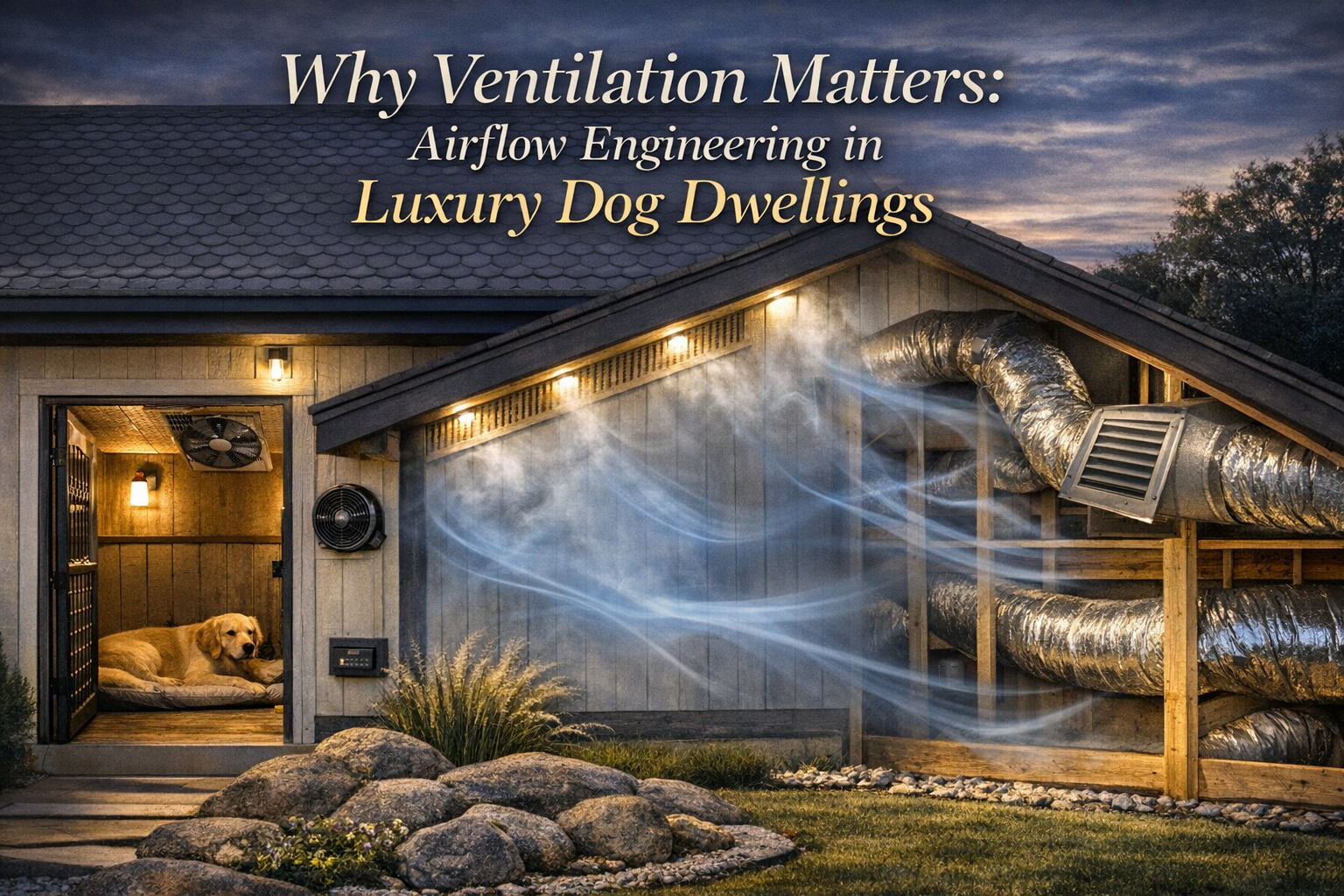
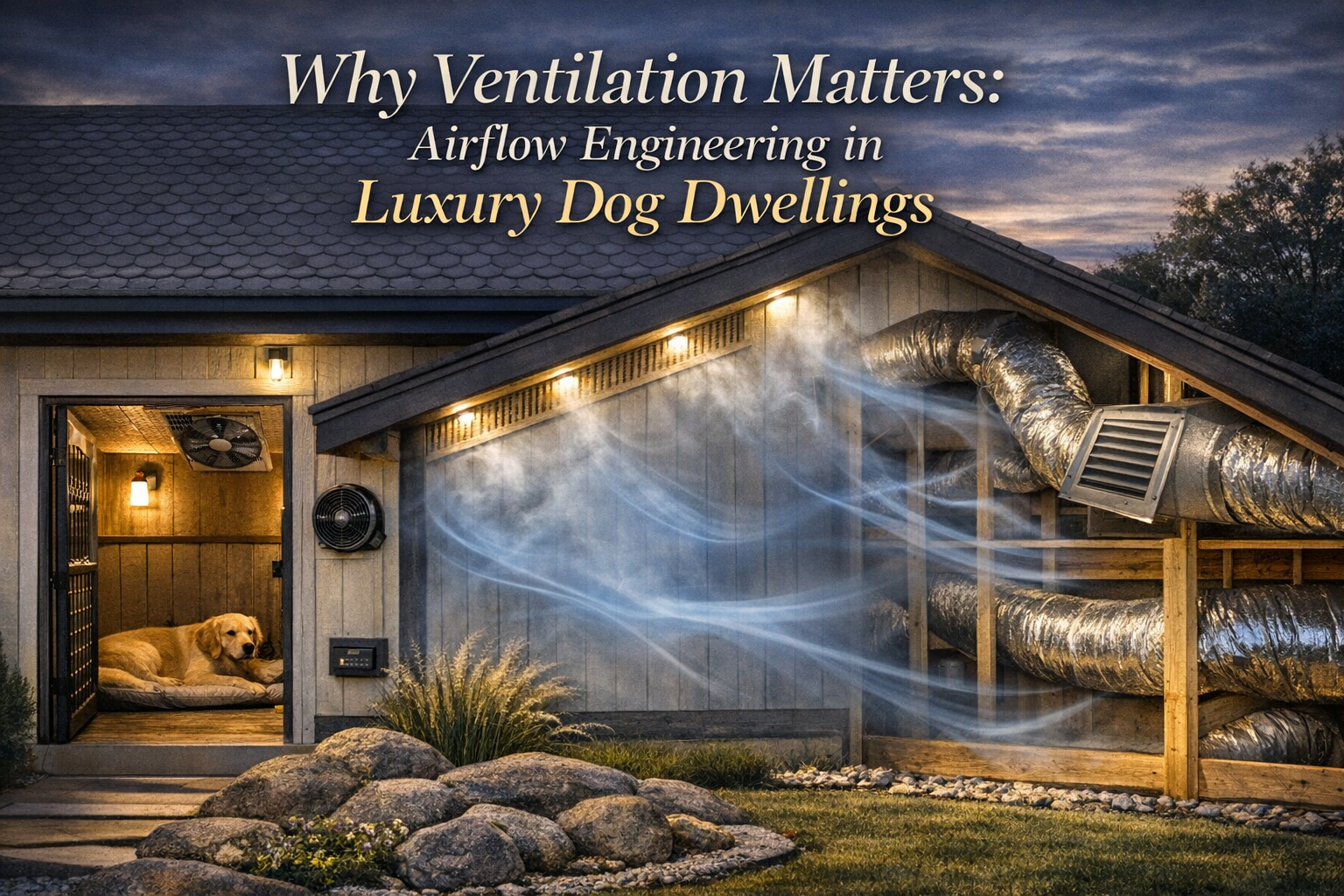
- Exhaust fans to remove stale, humid, or contaminated air
- Fresh‑air inlets to replenish oxygen and maintain pressure balance
- Circulation fans to eliminate stagnant pockets and mix air evenly
These elements work together to prevent moisture buildup, condensation, and lingering odors — all while supporting a stable, comfortable interior climate.
Humidity control: the silent threat
Humidity is one of the most overlooked factors in dog‑dwelling design. Without proper ventilation, moisture from breathing, cleaning, and weather can accumulate inside the structure.
When humidity isn’t managed, you may see:
- Condensation on walls, windows, or ceilings
- Musty or “wet dog” odors that never fully clear
- Mold and mildew growth in hidden areas
- Discomfort and potential respiratory strain for dogs
A luxury dog dwelling should manage humidity as intentionally as it manages temperature, using airflow, exhaust, and, when appropriate, dehumidification.
Air changes per hour: the metric behind comfort
In engineered animal spaces, designers often talk about “air changes per hour” — how many times the air inside a space is replaced with fresh air in one hour. While the exact number depends on climate, size, and use, the principle is simple: stale air out, fresh air in, on a consistent, predictable cycle.
For a luxury dog dwelling, this means:
- More stable indoor temperatures
- Better control of humidity and odors
- Less risk of stagnant, stuffy air
- A more comfortable, wellness‑oriented environment for the dog
The luxury difference: airflow as wellness architecture
In a high‑end dog estate, ventilation isn’t an afterthought — it’s part of the architectural DNA. The goal is not just to “move air,” but to create a calm, clean, and consistent atmosphere that supports canine health and comfort every day.
Thoughtful airflow design in a luxury dog dwelling can include:
- Quiet, efficient mechanical systems that don’t disturb rest
- Balanced intake and exhaust so air feels fresh, not drafty
- Humidity‑aware design that protects both the dog and the structure
- Even airflow distribution that avoids hot spots and cold corners
- Integration with insulation and climate control for year‑round performance
The result is a space that feels intentional — not just a shelter, but a carefully engineered environment where a dog can breathe easily, relax deeply, and live in comfort that matches the rest of the estate.
Final takeaway
Ventilation is the hidden engine of a luxury dog dwelling. It protects respiratory comfort, stabilizes temperature, controls humidity, and preserves the structure itself. When airflow engineering is done well, the entire environment feels calmer, cleaner, and more refined — exactly what a true luxury dog estate should deliver.
Check out all of the Executive Estate sizes.
These sizes accommodate one or many dogs and small to very large. Options are available to meet your personal storage needs. View the 40 second tour of the Executive Estate Collection.
- Small Breeds (up to 25 lbs) → 4' × 8', 6' x 8'
- Medium Breeds (25–60 lbs) → 6' × 8' or 6' × 10'
- Large Breeds (60–100 lbs) → 6' x 10', 8' × 10', 8' × 12', or 8' x 14' Double Run
- Giant Breeds (100+ lbs) → 8 x 14 Single Run
- With shed storage space → 8' x 16' includes Separate Feed Room, 8' x 18' includes 8' x 8' Storage Shed, 8' x 20' with 9' x 9.5' Storage Shed
- Lots more Storage Shed and Dog House & Kennel Combo 10' x 24'
Your Your Step‑by‑Step Guide to Designing the Executive Estate of Your Dog’s Dreams awaits.
Any size can be ordered with dividers and additional dog doors to make separate quarters. The doghouse is made to order based on all of your customizations.
Executive Estate Series · Post 8

Written by Mindy Giles