How a Safe Space Creates Security, Better Behavior, and Lifelong Calm
For generations, dog owners have relied on crate training to raise well‑adjusted, confident puppies — not because it’s trendy, but because it’s rooted in a dog’s natural instincts. Puppies are born seeking comfort, boundaries, and a den‑like retreat. When introduced with patience and positivity, crate training becomes one of the most powerful tools for shaping a puppy’s emotional stability, behavior, and independence.
This guide explores the benefits of crate training a puppy, why puppies naturally like having a safe space, and how a crate becomes the foundation for potty training success, calmer travel, better home‑alone behavior, and lifelong confidence.
The Psychology of the Den: Why Puppies Like Crates
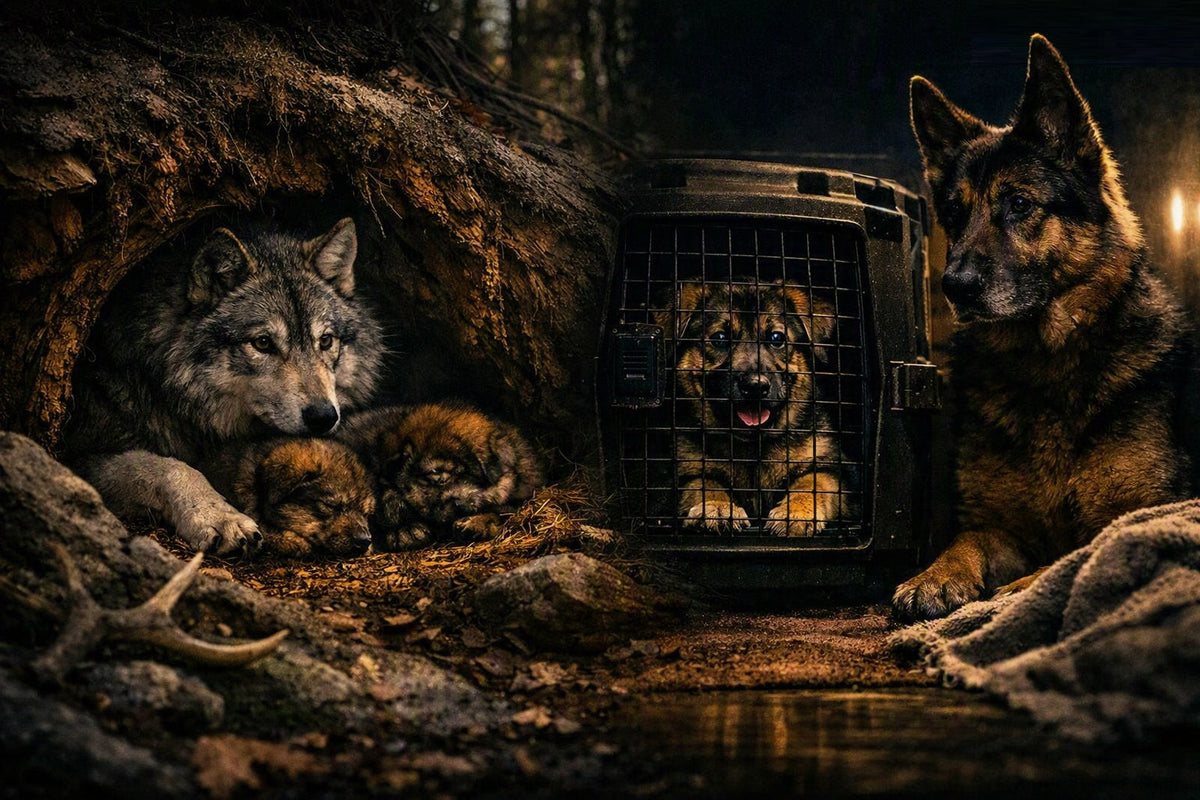
Dogs are den animals by nature. Long before they were our companions, they sought enclosed spaces for warmth, protection, and rest. A crate gently recreates that instinct — offering a puppy a place that feels predictable, quiet, and safe.
Inside their crate, puppies learn:
- The world is not overwhelming
- They have a space that belongs only to them
- Rest is encouraged, not forced
- Security comes from structure
When a crate becomes a positive retreat, puppies gravitate toward it naturally. It becomes their bedroom, their sanctuary, and their emotional anchor — the heart of effective puppy safe space training.
Early Puppy Benefits: Structure Builds Success
Puppies thrive on routine. Crate training gives them a predictable rhythm that supports healthy development and sets the stage for long‑term success.
Potty Training Made Easier
Puppies don’t want to soil the space where they sleep. A crate helps them learn bladder control, understand schedules, and develop clean habits faster. This is one of the core benefits of crate training a puppy and a cornerstone of crate training for potty training success.
Prevents Destructive Behavior
Chewing furniture, getting into trash, or exploring unsafe areas often happens when puppies are unsupervised. A crate keeps them safe while teaching boundaries, making crate training for destructive behavior prevention a powerful management tool.
Creates a Healthy Daily Rhythm
A consistent crate training routine for puppies helps them learn when it’s time to rest, when it’s time to play, and when it’s time to explore — a balance that reduces overstimulation and improves behavior.
Home‑Alone Confidence: Independence Without Anxiety
One of the greatest gifts crate training gives a puppy is emotional independence.
When puppies learn to relax in their crate while you’re home, they also learn to relax when you’re away. This prevents the development of separation anxiety — one of the most common behavioral challenges in adult dogs.
Crate training teaches puppies:
- You always return
- Being alone is safe
- Calmness is rewarded
- Their crate is a predictable comfort zone
This foundation creates confident dogs who can handle life’s transitions with ease, making crate training independence for puppies and crate training for separation anxiety prevention essential parts of early training.
Travel & Safety: A Calm Puppy Is a Safe Puppy
Whether you’re driving across town or flying across the country, a crate‑trained puppy travels with far less stress.
Crates provide:
- A familiar environment during motion
- Protection during sudden stops or turbulence
- Reduced anxiety from new sights and sounds
- A safe place to decompress in hotels or new homes
A puppy who feels secure in their crate becomes a dog who can travel anywhere with confidence. Crate training for calmer travel and crate training helps puppies feel secure are key benefits that extend well beyond puppyhood.
Behavioral Harmony: Structure Creates Better Manners
Crate training isn’t about confinement — it’s about teaching emotional regulation.
Puppies who learn to settle in their crate develop:
- Better impulse control
- Calmer reactions to stimulation
- More predictable behavior
- Stronger obedience foundations
A crate becomes a tool for teaching patience, boundaries, and balance — qualities that shape a well‑mannered adult dog. This is where crate training for puppy behavior and crate training confidence building truly shine.
From Puppyhood to Adulthood: A Lifelong Safe Space
As puppies grow, their crate remains a familiar comfort. Many adult dogs choose to sleep in their crate even when the door is open — a sign of trust, security, and emotional grounding.
Crate training becomes a lifelong asset, supporting:
- Overnight rest
- Stress‑free vet visits
- Calm boarding stays
- Smooth transitions during moves
- A predictable retreat during storms or chaos
With thoughtful crate training overnight tips and consistent routines, the crate evolves from a training tool into a lifelong sanctuary — the essence of crate training lifelong benefits.
Crate Training Q&A: What Puppy Owners Ask Most
Q: Is crate training cruel?
A: Not when done correctly. Crates mimic a puppy’s natural den instinct in puppies and provide comfort, structure, and safety. The goal is always to create a positive, secure environment — never punishment.
Q: How long can a puppy stay in a crate?
A: Young puppies should only be crated for short periods. A helpful guideline is: age in months = hours max (with breaks), always paired with play, affection, and outdoor time.
Q: What if my puppy cries in the crate?
A: Gentle reassurance, routine, and positive reinforcement help. Avoid letting them out while crying, as it teaches that crying opens the door. Instead, reward calm moments and build confidence gradually.
Q: Does crate training help with potty training?
A: Absolutely. It’s one of the most effective ways to teach bladder control and prevent accidents. Crate training for potty training success works by aligning with a puppy’s instinct not to soil their sleeping area.
Q: Will my dog always need a crate?
A: Not necessarily — but many dogs choose to keep using it because it feels safe and familiar. Over time, the crate becomes a trusted retreat rather than a requirement.